
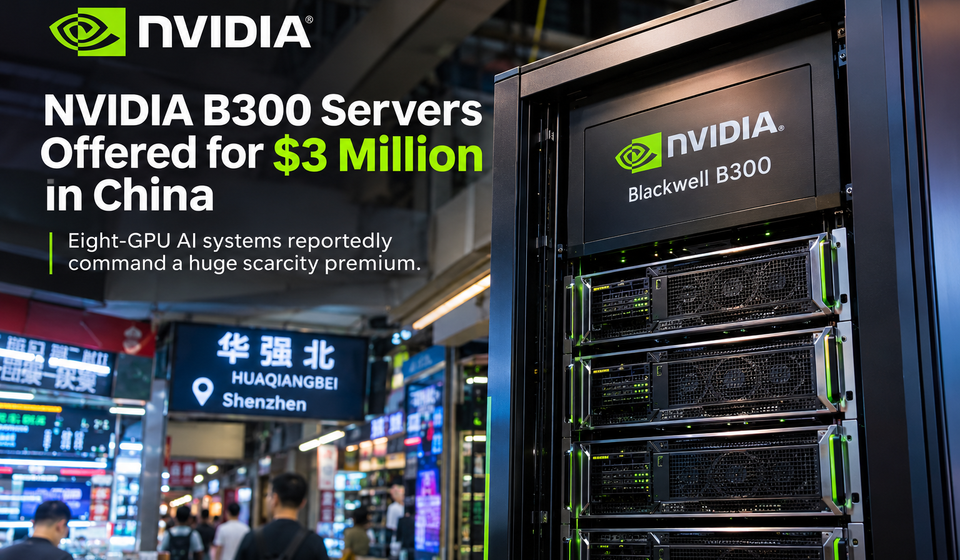
NVIDIA B300 Servers: China Listings Reveal Shocking $3.4 Million Price
Banned NVIDIA B300 Servers Advertised in China for $3 Million, Over Five Times US Price
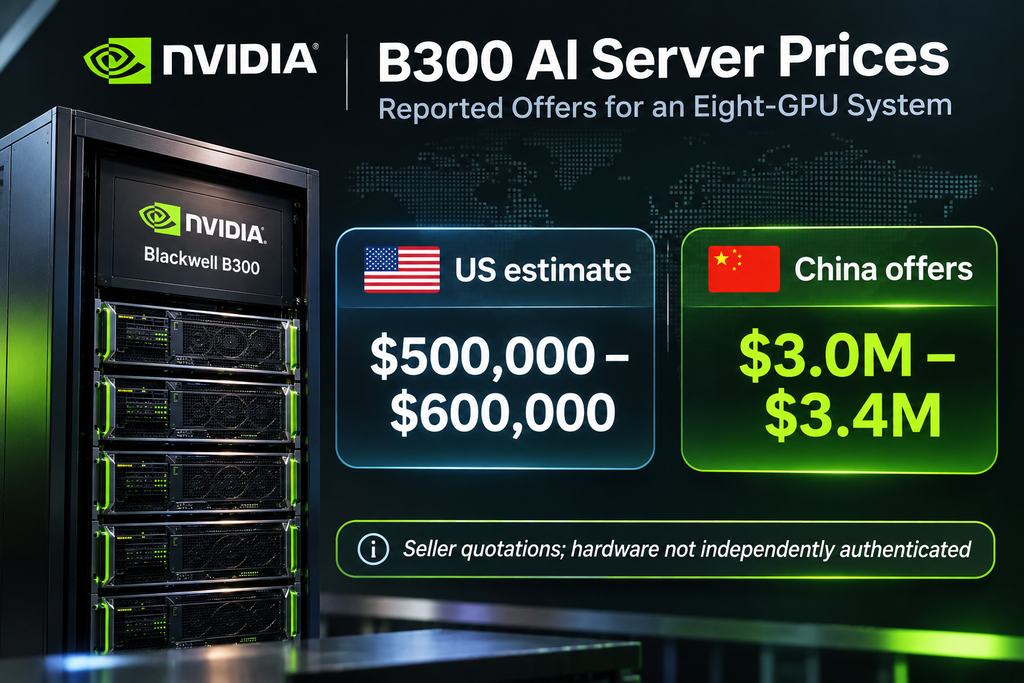
NVIDIA’s export-restricted Blackwell B300 AI servers are being offered for as much as $3 million to $3.4 million in China’s Shenzhen market, compared with an estimated US price of around $500,000 to $600,000. The prices were quoted by sellers at Huaqiangbei, a major electronics market, according to a November 25 report by The Washington Post.
The offers concern complete servers containing eight NVIDIA B300 GPUs, not individual chips. The unusually high prices highlight the demand for advanced AI computing hardware in China and the growing importance of alternative supply channels as US export restrictions tighten. However, the reported offers have not been independently authenticated as genuine B300 systems or confirmed completed sales.
Key Highlights
- Chinese sellers quoted up to $3.4 million for an eight-GPU NVIDIA B300 servers.
- An equivalent US server is estimated to cost $500,000–$600,000.
- The reported Chinese price is roughly five to six times higher.
- Sellers attributed the increase to tighter supply and export restrictions.
- The Washington Post could not independently verify the advertised B300 hardware.
- The development highlights the challenges of enforcing restrictions on advanced AI chips.
NVIDIA B300 Servers Are Being Offered for Up to $3.4 Million
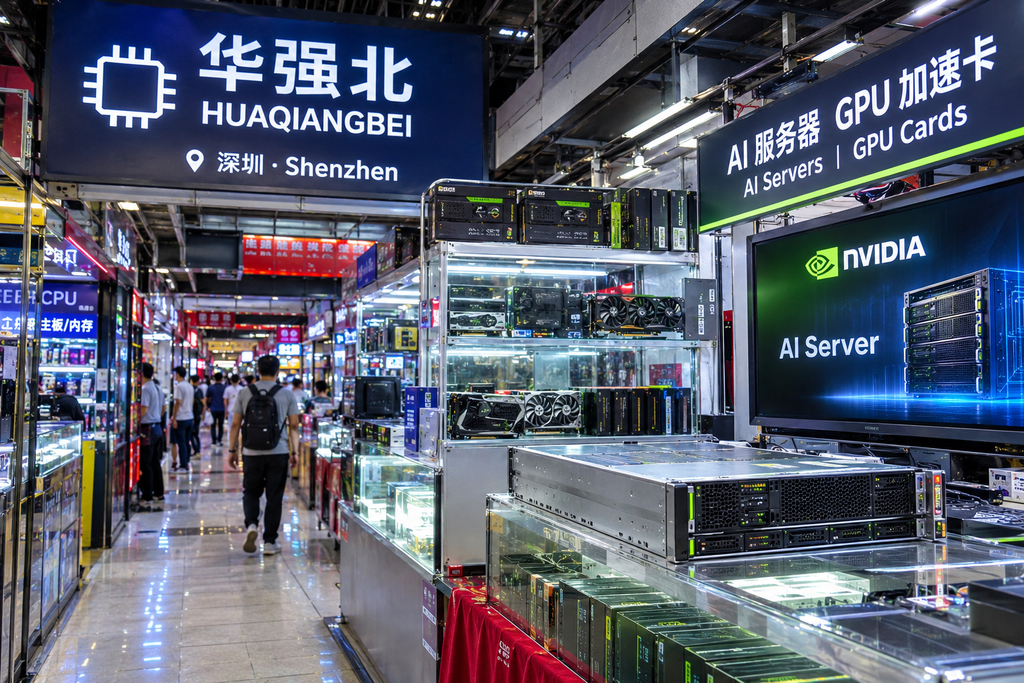
The NVIDIA B300 servers reported prices come from Shenzhen’s Huaqiangbei electronics market, where sellers offer a wide range of computing hardware.
During a visit to the market, a seller initially said he did not know where to find high-end NVIDIA chips. After contacting suppliers, he quoted approximately 20 million yuan, or around $3 million, for a server containing eight Blackwell B300 GPUs.
Other vendors reportedly quoted between $3 million and $3.4 million for similar eight-GPU systems.
One seller, identified only by his surname Wu, told the Washington Post that a comparable server had cost around $2 million two months earlier. This suggests a significant increase in the asking prices, although it should not be treated as a verified market-wide price index.
NVIDIA B300 Servers Price: China vs US
The difference between the reported Chinese offers and estimated US pricing is substantial.
| Market | Reported server price |
|---|---|
| United States | $500,000–$600,000 |
| China – Shenzhen offers | $3 million–$3.4 million |
| Earlier China quote, around two months ago | Approximately $2 million |
The US benchmark comes from Kyle Chan, a fellow at the Brookings Institution, who told the Washington Post that an equivalent B300 server typically costs around $500,000 to $600,000 in the United States.
Using $550,000 as a midpoint, a $3 million offer is approximately 5.5 times higher. At $3.4 million, the difference rises to more than six times.
These figures are seller quotations and market estimates, not official NVIDIA retail prices or verified transaction records.
Why Are NVIDIA B300 Servers Restricted in China?
The NVIDIA B300 servers belongs to the company’s Blackwell generation of advanced AI processors. These systems are designed for demanding computing workloads, including AI model training and inference.
The United States has imposed export restrictions on advanced NVIDIA hardware destined for China, citing national security concerns and the need to maintain its technological advantage.
Despite those restrictions, advanced NVIDIA chips have continued to appear in Chinese markets through complex supply networks. The Washington Post reported that sellers described Hong Kong as one route through which some hardware reaches Shenzhen.
The report also noted that vendors sometimes request deposits before allowing potential buyers to inspect equipment stored in off-site warehouses.
Why Chinese AI Companies Still Want NVIDIA’s Blackwell Hardware
China has developed its own AI processors and models, but access to high-performance computing remains an important consideration for companies training advanced AI systems.
NVIDIA’s B300 hardware is attractive because large AI workloads can require thousands of powerful GPUs. Access to this computing capacity can influence how quickly companies develop and train advanced models.
Brookings researcher Kyle Chan described access to NVIDIA’s most powerful chips as a decisive factor in the AI competition between the United States and China.
However, buying restricted hardware at several times its estimated US price introduces additional financial and operational risks for Chinese buyers.
Export Restrictions and the Growing Grey Market
The reported offers raise questions about how effectively export restrictions are being enforced.
The Washington Post also found that some sellers openly discussed the availability of restricted chips, while Chinese public procurement records reportedly listed purchases of export-controlled NVIDIA hardware by research institutions and universities.
In April 2026, Reuters reported that NVIDIA had said the B300 was restricted from sale in China and that its partners were expected to follow strict compliance requirements. The company also warned that it did not provide service or support for systems involving unlawful diversion.
The situation illustrates a difficult challenge for policymakers: restricting official exports does not necessarily eliminate demand or prevent hardware from moving through indirect supply networks.
The reported five-to-six-times price difference suggests that restrictions are creating a substantial scarcity premium for advanced AI hardware in China.
But expensive offers alone do not prove that large quantities of genuine B300 servers are reaching Chinese buyers. The Washington Post could not authenticate the advertised systems, and sellers reportedly relied on off-site inventory and advance deposits.
This distinction matters. There is a difference between a seller advertising restricted hardware, a buyer completing a transaction and the equipment actually being delivered and operated.
For NVIDIA, the situation also highlights the tension between its global AI hardware demand and restrictions on access to the Chinese market. For Chinese AI developers, the challenge is finding enough reliable computing capacity without paying unsustainable prices or risking supply disruptions.

The reported $3 million price tag is a striking indication of demand for NVIDIA’s Blackwell hardware in China. But the real test of the export restrictions will be whether authorities can verify, track and limit actual deliveries—not simply whether sellers continue advertising the servers.
For More Visit : The Washington Post
Also read
- The $12.9 Billion AI Deal: Nvidia Is Taking Over Hugging Face
- Jensen Huang Returns as NVIDIA CEO 11 Days After Resigning
- Jensen Huang Resigns as Nvidia CEO; Colette Kress Named Interim Chief