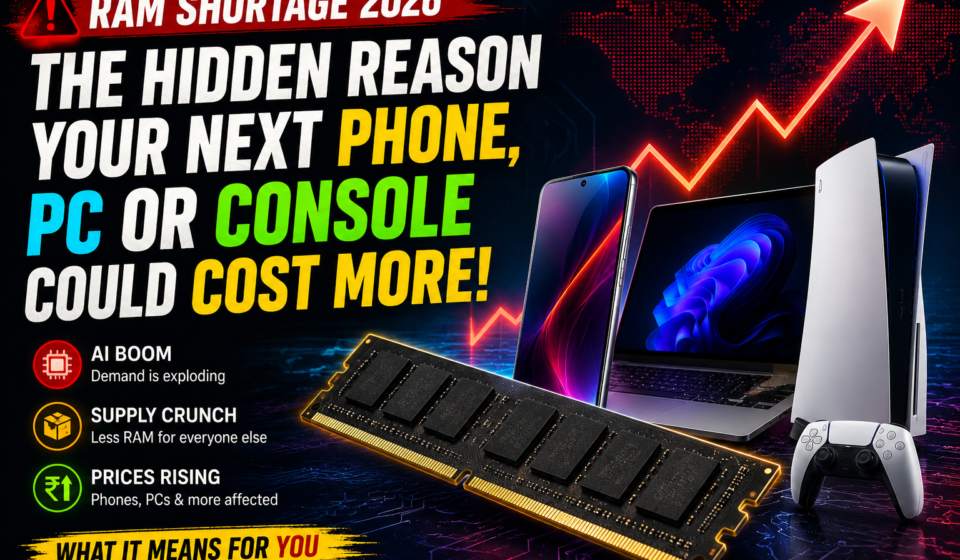
RAM Shortage Is Getting Worse: Why Your Next Phone or PC Could Cost More
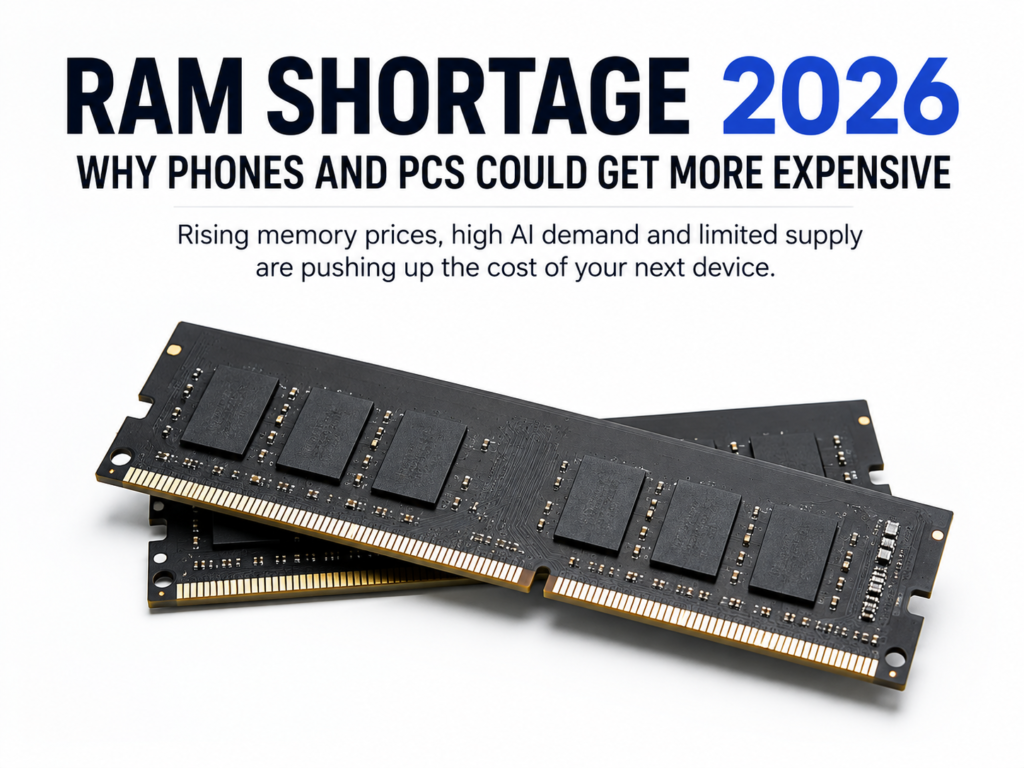
A new RAM shortage is turning into a much bigger problem for the technology industry, and this time the reason is not a factory shutdown or a shipping crisis. AI data centers are consuming huge amounts of memory, while chipmakers are shifting production toward higher-value AI memory.
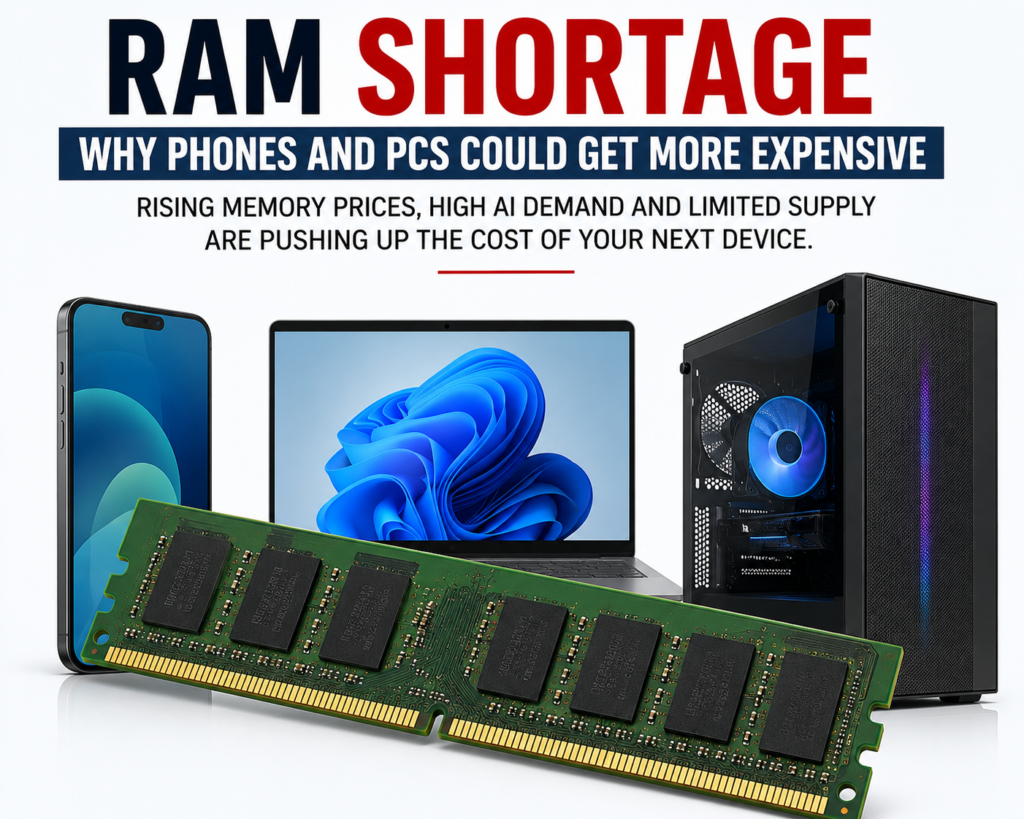
The result is already reaching everyday technology. RAM prices are rising, smartphone makers are facing higher component costs, PC shipments are under pressure, and companies are looking for new memory suppliers.
And the situation could last longer than many buyers expected.
Why Is There a RAM Shortage?
The biggest reason behind the RAM shortage is the explosive growth of AI.
AI data centers need large amounts of high-performance memory, particularly HBM, while phones, laptops and PCs rely heavily on memory such as LPDDR and DDR5. The world’s biggest memory manufacturers, including Samsung, SK hynix and Micron, are directing more production capacity toward AI-related products because they offer higher returns.
That leaves less capacity for consumer memory.
TrendForce says major DRAM manufacturers are prioritising server production, severely squeezing consumer DRAM supply. It expects the shortage to remain difficult in the near term because new capacity cannot be added quickly enough.
In simple terms, AI is buying more memory, and ordinary electronics are competing for what is left.
Your Next Smartphone Could Become More Expensive
The RAM shortage is already putting pressure on smartphone manufacturers.
TrendForce reported that mobile DRAM prices jumped sharply in the second quarter of 2026, with LPDDR4X prices estimated to rise at least 70–75% quarter over quarter and LPDDR5X prices by 78–83%.
That does not mean every phone will suddenly become 70% more expensive. Memory is only one part of a phone’s total cost.
But manufacturers have several choices: increase prices, reduce their profit margins, use different memory configurations or negotiate harder with suppliers.
Apple is reportedly even testing memory chips from China’s CXMT for some iPhones and MacBooks as companies look for ways to deal with tight supply and rising prices. Reuters noted that the report has not been independently verified by it and that Apple and CXMT did not comment.
PCs Are Feeling the Pressure Too
The RAM shortage could be even more noticeable when buying a laptop or desktop PC.
PC manufacturers need DRAM for system memory and NAND for storage, and both markets are facing pressure. IDC has warned that the memory crisis is reshaping the PC market, with higher component costs contributing to weaker shipment expectations.
Recent industry data also showed global PC shipments falling in the second quarter of 2026, with rising DRAM and NAND costs among the major factors affecting the market.
For buyers, this could mean fewer attractive discounts and higher prices, particularly for laptops with larger memory and storage configurations.
What About Gaming Consoles?
The RAM shortage could eventually affect gaming hardware because modern consoles also depend on high-speed memory.
However, there is currently no strong evidence that a specific next-generation console has been delayed because of the RAM shortage. It would therefore be premature to claim that upcoming PlayStation or Xbox hardware will definitely become more expensive or face delays because of memory supply.
The risk is still worth watching. If memory remains expensive, manufacturers may have to rethink component costs, launch pricing or supply plans.
When Will RAM Prices Come Down?
This is the difficult question.
The RAM shortage is not something manufacturers can fix overnight. Building new memory production capacity takes significant time, while AI companies continue signing large supply agreements.
Samsung has indicated that the broader chip shortage could extend into 2028, while analysts are also expecting tight DRAM and NAND conditions to continue.
That means consumers should not assume that waiting a few months will automatically bring cheaper RAM.
What Should Buyers Do?
If you need a new phone, laptop or PC soon, waiting only for RAM prices to fall may not be the best strategy.
But if your current device is working perfectly, there is also no reason to panic-buy.
The important point is that the RAM shortage is changing the economics of consumer technology. AI may be invisible when you use your phone or laptop, but its enormous demand for memory is increasingly showing up in the price and availability of the hardware in your hands.
And until memory production catches up with demand, your next device may cost more simply because the memory inside it has become much more expensive.
Related Articles
- Best AI Tools Every Student Should Know in 2026
- YouTube Monetization Changes 2027…
- Flipkart Freedom Sale 2026
- Vivo S2 Price in India Revealed
For more info visit Ram