

OpenAI Engineer Arrested: 5 Key Facts About Hidden Recorder
OpenAI Engineer Arrested: Hidden Recording Device Raises Security Concerns
An OpenAI engineer has been arrested in the United States over allegations that he installed a hidden audio recording device inside an executive conference room at the artificial intelligence company’s San Francisco office. The case has raised fresh questions about insider security and the protection of confidential AI research.
The engineer, Abdulrahman Alfozan, 35, was arrested on October 9, 2026, and made his initial appearance in federal court on October 13, according to the US Department of Justice (DOJ). Prosecutors have charged him with using or attempting to use an electronic device to intercept oral communications.
Investigators allege that the device was concealed in toilet paper and connected to a USB port behind a television in a room used for sensitive executive discussions. OpenAI says it found no indication that the employee improperly accessed or extracted its model weights, source code or customer data.
The investigation remains ongoing, and the allegations have not been proven in court.
What Happened at OpenAI’s San Francisco Office?
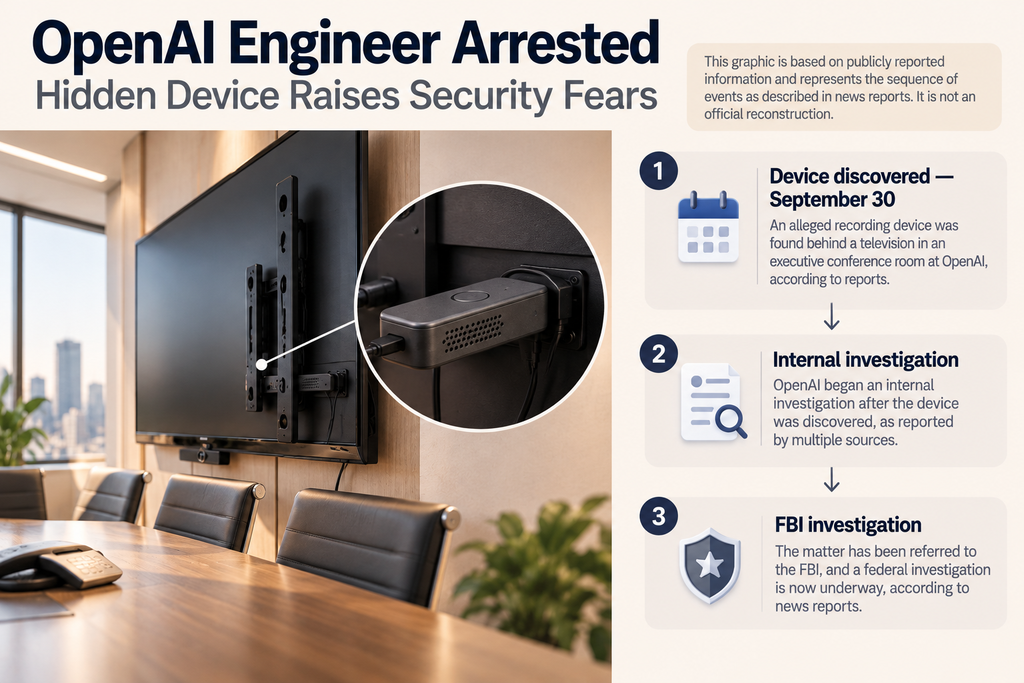
According to the criminal complaint described by the DOJ, OpenAI employees discovered a covert audio recording device on September 30, 2026, inside an executive conference room at one of the company’s San Francisco buildings.
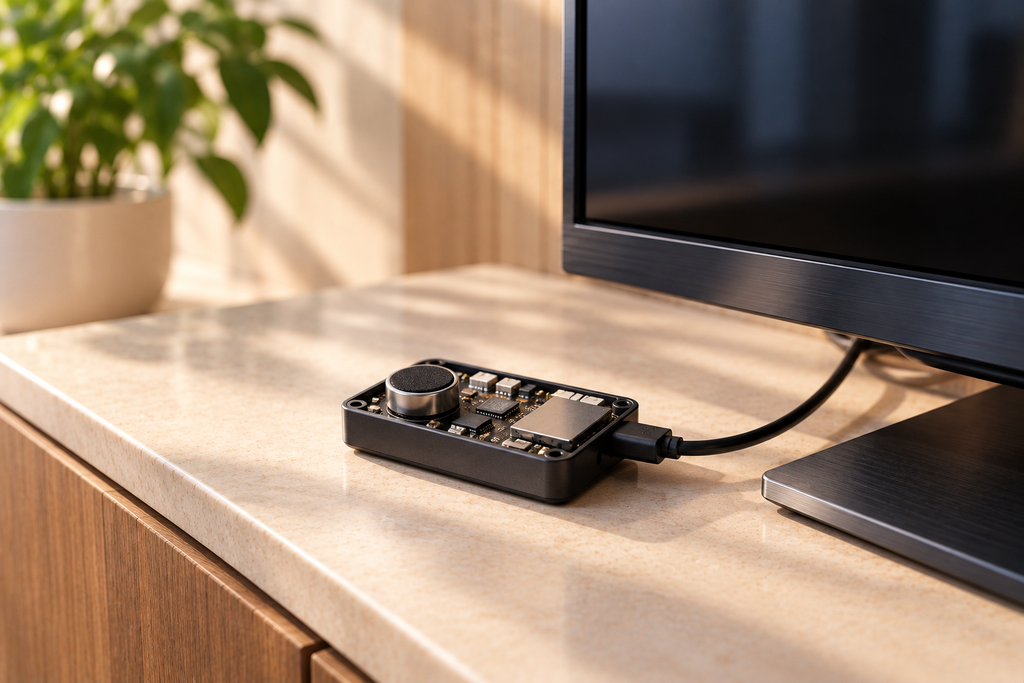
The device was reportedly inserted into a USB port on the back of a television. Investigators allege that it had been installed around September 28 and concealed using toilet paper.
The room was regularly used for discussions involving confidential technical, commercial and strategic matters. These included proprietary research, product development plans, business opportunities and information about OpenAI’s technology and business relationships.
The discovery prompted an internal security investigation. OpenAI reviewed evidence that included office surveillance footage and information associated with the device.
Authorities allege that Alfozan had appeared near the conference room on multiple occasions before the device was discovered, despite not having permission to access or participate in meetings held there.
These claims form part of the criminal complaint and should not be interpreted as a finding of guilt.
Who Is Abdulrahman Alfozan?
Abdulrahman Alfozan is a 35-year-old Saudi national who worked as an engineer at OpenAI from July 2025, according to the US Department of Justice.
Reports identify him as a technology professional with previous experience in the technology and startup sectors. The case has attracted attention because of the sensitive nature of the work carried out at OpenAI, where researchers and engineers develop advanced AI models and products.
However, the significance of the allegations lies in the alleged conduct, not the employee’s nationality or professional background.
The criminal charge concerns the alleged interception of oral communications using an electronic or other device. The public allegations do not establish that Alfozan successfully stole AI model weights, source code or other intellectual property.
How Was the Hidden Recording Device Discovered?
The device was found during an internal security investigation after OpenAI employees discovered it behind the television in the conference room.
Investigators subsequently examined office surveillance footage and other evidence to establish how the device may have been installed and who might have been responsible.
According to the DOJ, a review of workplace activity showed Alfozan near the targeted room before the device was discovered. Prosecutors also allege that he had made inquiries through a productivity tool about office locations, meeting rooms, room capacity, calendars and the locations of executives and external partner meetings.
Authorities further allege that a chatbot account associated with Alfozan’s spouse submitted prompts related to building, customising, installing and testing an audio recording device between September 24 and September 30.
The reported prompts included technical questions about continuous audio recording, wireless connectivity, remote access and encryption. Investigators also linked some prompts to details associated with the device recovered at OpenAI.
These findings are allegations set out in the criminal complaint. The investigation and any court proceedings will determine how the evidence should be interpreted.
A Second Recording Device Was Reportedly Found
The investigation did not end with the device discovered in the conference room.
The DOJ says OpenAI security personnel later found another similar recording device inside a bag left unattended by Alfozan in a different room at the company’s office.
According to the complaint, the bag also contained personal belongings, including his wallet and identification.
The reported discovery of a second device is an important part of the case because investigators are examining whether the conference-room device was an isolated incident or part of a wider alleged effort.
However, the existence of a second device does not, by itself, establish that any confidential conversation was successfully recorded or transmitted. The available public statements do not establish that the stored recordings were successfully accessed.
Did the Employee Steal OpenAI’s AI Technology?
There is an important distinction between the alleged attempt to record confidential conversations and the theft of AI technology.
OpenAI said it had no indication that the employee improperly accessed or extracted its model weights, source code or customer data. The company also said it referred the matter to the FBI and terminated the employee.
The charge announced by the DOJ relates to the alleged interception of oral communications. It is not, based on the announced charge, a separate conviction or finding that trade secrets were stolen.
That distinction matters because discussions in an executive room may involve confidential technical information, but the discovery of a recording device does not prove that every discussion was recorded, that the recordings were successfully retrieved, or that information was passed to another party.
The FBI investigation is continuing.
Why This Case Matters for AI Company Security
AI companies protect more than software code. Their internal meetings can involve research priorities, product roadmaps, model capabilities, commercial partnerships and strategic decisions.
A suspected insider incident can therefore create serious security concerns even when investigators have not established that digital assets were taken.
The case highlights several practical challenges for technology companies:
- Physical security: Sensitive meeting rooms need access controls and regular checks for unauthorised devices.
- Insider risk: Employees may have legitimate access to some company systems but not to every room, meeting or internal resource.
- Device monitoring: Unusual hardware connected to office equipment can require investigation.
- AI-assisted security: Internal AI tools and activity logs may help security teams identify suspicious patterns, but findings still need careful human review.
- Evidence protection: Companies must preserve relevant records and work with investigators while protecting employees’ rights and confidential information.
The case also shows why security cannot rely on digital protections alone. Physical access, meeting schedules, equipment and internal processes can all become relevant when a suspected incident involves confidential communications.
What Happens Next in the Case?
Alfozan faces a federal charge involving the alleged use or attempted use of a device to intercept oral communications. The DOJ says the charge carries a maximum potential penalty of five years in prison, a $250,000 fine and up to three years of supervised release if he is convicted.
Those are maximum potential penalties, not a prediction of the outcome. Any sentence would depend on the proceedings and applicable law.
According to the US Attorney’s Office for the Northern District of California, Alfozan is scheduled for a detention hearing on October 19, 2026.
The case remains subject to the US legal process. The allegations in a criminal complaint are not proof of guilt, and the evidence must be evaluated through the appropriate proceedings.
Conclusion
The arrest of an OpenAI engineer over an alleged hidden recording device has drawn attention to the physical and internal security challenges facing companies working on advanced AI.
Investigators allege that a device was concealed behind a television in an executive conference room and that a second similar device was later found in the employee’s bag. OpenAI has said it found no indication that model weights, source code or customer data were improperly accessed or extracted.
The case is still developing. Until the legal process establishes the facts, the allegations should be treated as allegations rather than proof that confidential AI technology was stolen.
Frequently Asked Questions
1. Why was the OpenAI engineer arrested?
Abdulrahman Alfozan was arrested over allegations that he installed a covert audio recording device in an executive conference room at OpenAI’s San Francisco office. He was charged with using or attempting to use a device to intercept oral communications.
2. When was the OpenAI engineer arrested?
According to the US Department of Justice, Alfozan was arrested on October 9, 2026, and made his initial appearance in federal court on October 13.
3. Where was the hidden recording device found?
OpenAI employees discovered the device on September 30, 2026, connected to a USB port behind a television in an executive conference room.
4. Was OpenAI’s source code stolen?
OpenAI said it had no indication that the employee improperly accessed or extracted its model weights, source code or customer data. The public allegations do not establish that AI technology was stolen.
5. Was a second recording device discovered?
Yes. The DOJ says OpenAI security personnel found another similar device in a bag left unattended by the employee in a different room at the office.
6. Did an AI chatbot help plan the alleged recording?
Prosecutors allege that a chatbot account associated with the employee’s spouse submitted technical prompts related to building and configuring a recording device. These claims form part of the criminal complaint.
7. What punishment could the engineer face?
If convicted, he could face a maximum of five years in prison, a $250,000 fine and up to three years of supervised release. The actual outcome, if any, will depend on the legal proceedings.
8. Is the OpenAI recording-device case closed?
No. The FBI investigation is ongoing, and the allegations have not been proven in court.
Recommendations :
DoT Caller Name Rule: 5 Important Changes Coming November 1
OPPO Pad Mini: 5 Powerful Features to Know Before Launch
ColorOS 17 Rollout Starts October 29: Is Your Phone Eligible?
Source :
U.S. Department of Justice
CBS News Report
Reuters News Report