

Microsoft Declares Code Red After Major Global Outage
Microsoft Declares ‘Code Red’ After 24-Hour Global Outage Disrupts Outlook, Teams and Copilot
Microsoft has launched an internal “Code Red” initiative to strengthen its engineering systems and prevent major service disruptions after a 24-hour outage affected several of its products earlier this month. The November 12–13 incident disrupted Exchange Online, Outlook, Microsoft Teams, Copilot and other Microsoft 365 services, affecting businesses and organisations across multiple countries.
The emergency response follows an internal review that exposed problems with Microsoft’s outage management, engineering coordination and software-update deployment. The company now aims to resolve future worldwide service incidents within one hour and plans to use AI agents to help engineers identify technical problems faster.
The incident is particularly significant because Microsoft 365 services are widely used by businesses, governments, schools and other organisations for everyday communication and work.
Key Highlights
- Microsoft declared an internal Code Red following a major November 12–13 outage.
- Exchange Online, Outlook, Teams, Copilot and other Microsoft 365 services were affected.
- Microsoft blamed an undetected Windows scalability defect introduced in July.
- Engineers exchanged more than 11,000 messages across 11 Teams chats during the response.
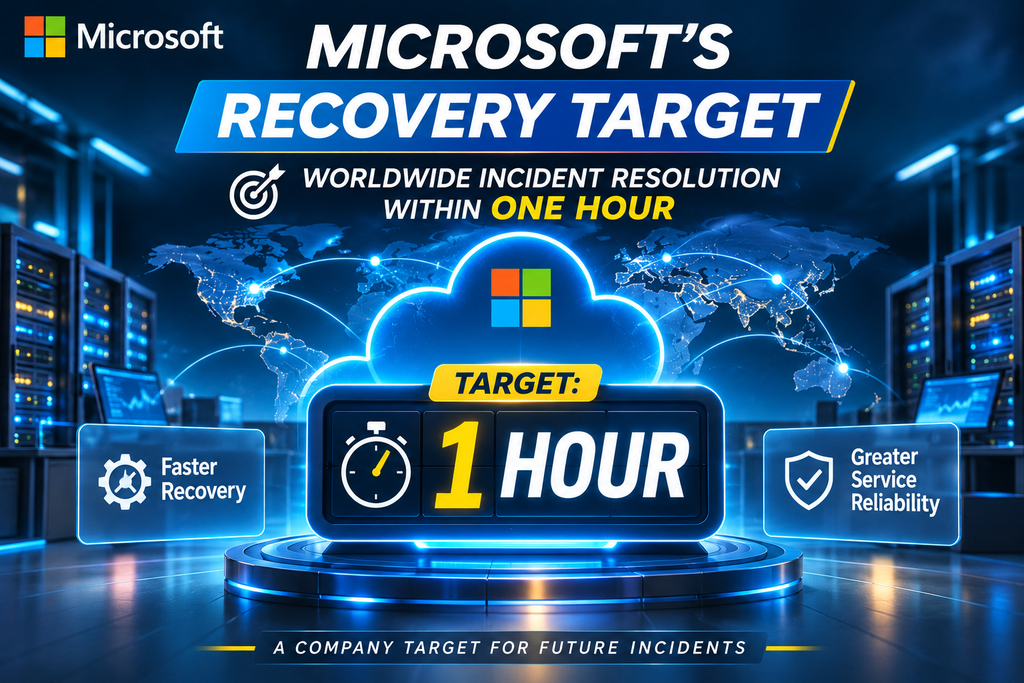
- Microsoft wants to resolve future global service incidents within one hour.
- The company plans to use AI agents to help engineers diagnose system problems.
- Internal memos revealed that an urgent production fix previously took five to six days to reach worldwide deployment.
What Is Microsoft Code Red Initiative?
Microsoft’s Code Red is an internal high-priority mobilisation that Microsoft has introduced to address weaknesses in its engineering and operational practices.
The initiative follows the November outage, which Microsoft 365 Core President Jason Henderson described in an internal memo as the most customer-impacting incident in Exchange Online’s history.
Henderson told employees that Code Red represents the highest priority for the team. The initiative is not a new consumer product or a warning that Microsoft services are currently under attack. Instead, it is an urgent internal effort to improve service reliability, incident response and recovery.
According to internal memos reviewed by Reuters, Microsoft has identified several areas where its existing systems and processes need improvement.
What Happened During the November 12–13 Microsoft Outage?
The disruption lasted approximately 24 hours and affected several important Microsoft services, including:
- Exchange Online: Microsoft’s cloud-based email service.
- Outlook: Email, calendar and communication features.
- Microsoft Teams: Workplace messaging and collaboration.
- Microsoft Copilot: Microsoft’s AI assistant.
- Other Microsoft 365 services: Additional tools connected to the company’s workplace platform.
The outage affected organisations across multiple countries, including Australia, Japan and the United States. Reports also described disruptions to government operations, delays for trading firms and problems with airline communications.
Microsoft attributed the incident to an undetected Windows scalability defect introduced in July. The company said the disruption was not caused by a cyberattack or AI agents. CEO Satya Nadella also publicly apologised for the incident.
Why Microsoft’s Engineering Response Came Under Scrutiny
The internal review revealed that the technical problem was not the only challenge. Microsoft’s engineers also faced difficulties coordinating their response and understanding the full situation.
Amanda Silver, Microsoft’s corporate vice president overseeing M365 Core and Work IQ, described the response as working through a “fog of war” in an internal memo.
According to her account, engineers exchanged more than 11,000 messages across 11 separate Teams chats while trying to investigate the outage. However, diagnostic information was spread across different internal tracking systems, making it difficult for teams to maintain a shared understanding of the problem, possible causes and decisions.
Charles Lamanna, Microsoft’s executive vice president of Copilot, Agents and Platform, reportedly said during a Code Red review that the affected component had experienced roughly ten years’ worth of acceptable failures.
These details suggest that Microsoft is reviewing not only the original technical defect but also how its engineering teams detect, communicate and respond to failures.
Microsoft Sets a One-Hour Recovery Target
One of the most important goals under the Microsoft Code Red initiative is to resolve future worldwide service incidents within one hour.
To work towards this target, Microsoft has outlined five workstreams focused on improving its infrastructure and recovery processes. The reported priorities include:
- Load shedding: Managing excessive system demand to prevent overloaded services from failing.
- Geographic traffic partitioning: Separating traffic across regions so that problems in one area are less likely to affect the entire global service.
- Faster recovery mechanisms: Improving the processes and systems used to restore services after an incident.
- Better incident coordination: Making it easier for engineering teams to share diagnostic information and track decisions.
- AI-assisted diagnosis: Using AI agents to help engineers analyse system-health data and identify problems more quickly.
Microsoft 365 Core President Jason Henderson will also hold daily meetings with the Substrate leadership team, which oversees engineering for the underlying Microsoft 365 services. Weekly reviews will be used to monitor progress on corrective actions.
Microsoft Also Wants to Fix Slow Software Updates
Another issue identified in Microsoft’s internal communications concerns the time required to deploy urgent software fixes across its global infrastructure.
In an earlier internal memo, Henderson said an urgent production fix in a separate incident had taken five to six days to reach worldwide deployment.
He said Microsoft needs to reduce the time between detecting a critical security issue and safely deploying a fix across the world to just one hour.
This is an important part of the reliability challenge. Identifying a software defect is only the first step. Large cloud platforms must also test, approve and distribute fixes safely across systems operating in different regions.
Microsoft’s goal is to make that process significantly faster without introducing additional problems during deployment.
Microsoft also plans to use AI agents to help engineers diagnose system problems more quickly.
These agents are expected to assist with analysing system-health information and identifying potential issues. The intention is to help engineers understand what is happening across complex infrastructure without depending entirely on manual investigation.
However, Microsoft has not said that AI agents will independently manage or resolve every future outage. The reported plan is to use them as additional tools for engineering teams.
There is also an important distinction between the cause of the November incident and Microsoft’s planned response: the company said the outage was caused by a Windows scalability defect, not by AI agents. AI-assisted diagnosis is part of the corrective work being introduced afterwards.

Expert Analysis
Microsoft’s Code Red initiative highlights how reliability depends on more than preventing individual software defects. Large cloud platforms also need coordinated incident response, clear diagnostic information and fast but safe update deployment. A one-hour worldwide recovery target is ambitious, and achieving it will require measurable improvements across Microsoft’s infrastructure and engineering processes. For businesses relying on Microsoft 365, the real test will be whether these changes reduce the duration and impact of future disruptions.
Conclusion
Microsoft’s Code Red initiative is a direct response to the serious November 12–13 outage that disrupted Outlook, Teams, Exchange Online, Copilot and other Microsoft 365 services.
The company is now focusing on faster recovery, better regional traffic management, improved engineering coordination and AI-assisted diagnosis. It has also set a one-hour target for resolving future worldwide incidents.
The announcement signals that Microsoft is treating service reliability as a major engineering priority. However, customers will ultimately judge the initiative by whether Microsoft can prevent similar disruptions and restore essential services more quickly when failures occur.
FAQs
1. Why did Microsoft declare Code Red?
Microsoft declared Code Red after a major outage on November 12–13 disrupted Exchange Online, Outlook, Teams, Copilot and other Microsoft 365 services for approximately 24 hours.
2. What caused the Microsoft outage?
Microsoft attributed the disruption to an undetected Windows scalability defect introduced in July. The company said it was not caused by a cyberattack or AI agents.
3. What does Microsoft’s Code Red mean?
It is an internal emergency initiative that gives the work of improving engineering practices, service reliability and outage recovery the highest priority.
4. Does Microsoft plan to use AI to prevent outages?
Microsoft plans to use AI agents to help engineers analyse system-health information and diagnose problems faster. They are intended to support engineering teams.
5. What is Microsoft’s new outage recovery target?
Microsoft aims to resolve future worldwide service incidents within one hour.
Suggestions:
Microsoft Ignite 2026: 7 Exciting AI Announcements & Powerful New Tools
Microsoft 365 Outage: Outlook, Teams & Copilot Hit Worldwide
Oracle Stock Nears $100 After Microsoft AI Cloud Deal Exit
Source:
Reuters – Microsoft declares Code Red after historic outage
India Today – Microsoft declares Code Red to fix engineering flaws
NDTV Profit – Microsoft Code Red following a major outage
Ars Technica – Microsoft’s engineering response and outage review
The Economic Times – Microsoft Code Red report