
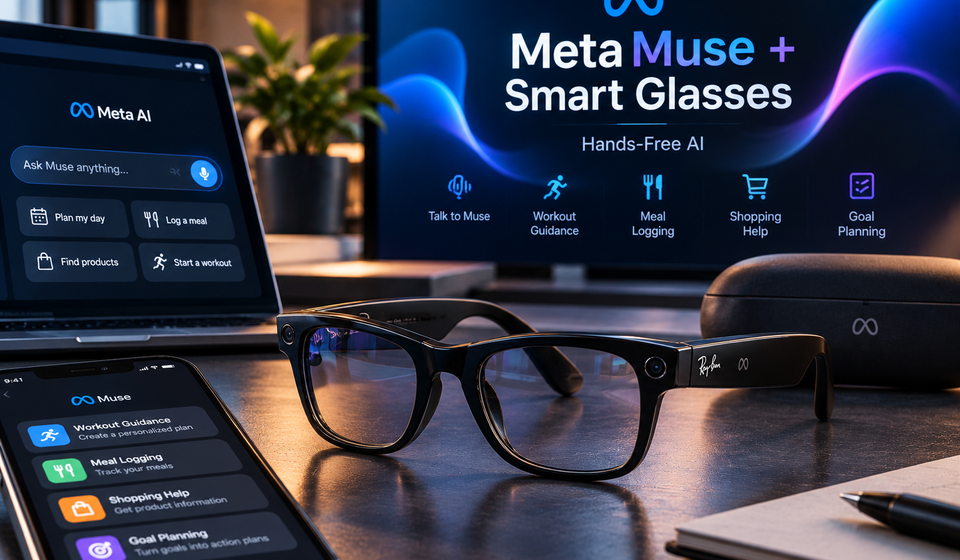
Meta Connect 2026: Muse AI Is Coming to Smart Glasses
Meta Muse AI
Meta has announced a major expansion of its AI glasses lineup at Meta Connect 2026, with one of the biggest updates centered on Muse, its personal AI agent.
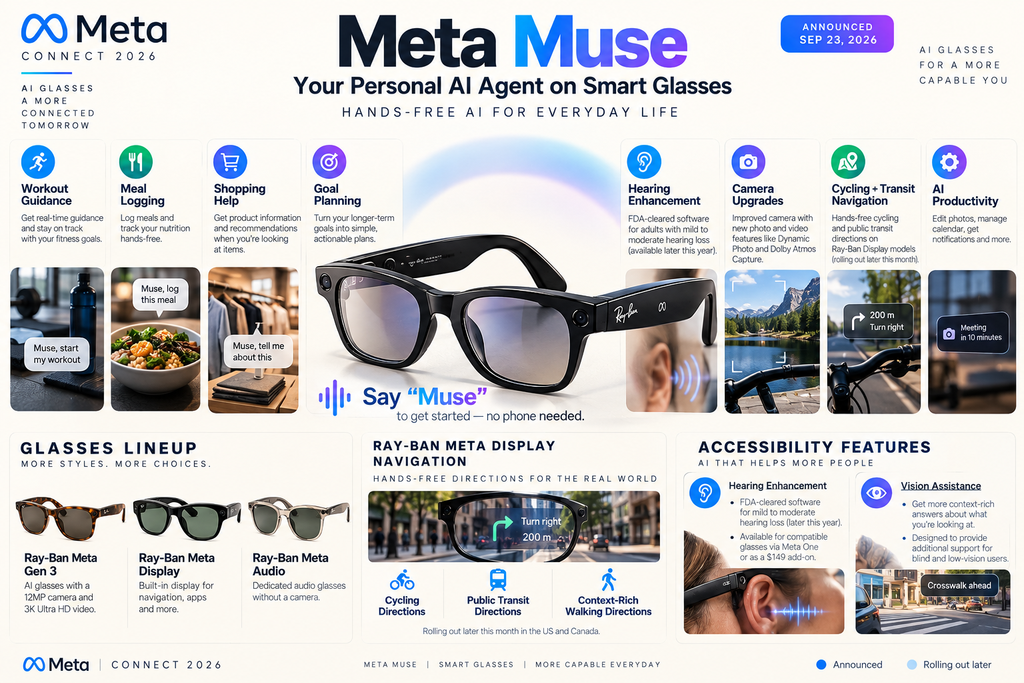
Meta says Muse is being brought to its AI glasses to help users handle tasks without reaching for a phone. Users will be able to activate Muse hands-free by saying its name, then ask it to help with activities such as workouts, meal logging, shopping and longer-term goals. Facebook
The announcement is part of a much broader update to Meta’s glasses, covering accessibility, cameras, navigation, audio and productivity features.
Muse Comes to Meta’s AI Glasses
Muse was introduced by Meta earlier this month as a personal AI agent designed to help people accomplish tasks and work toward goals. Meta describes it as an agent that can proactively help users rather than simply answer individual questions. Facebook
At Connect 2026, Meta announced that it is bringing Muse to its AI glasses.
The key difference is how people interact with it. Instead of opening an app or picking up a phone, users can say Muse’s name directly to the glasses and start a conversation.
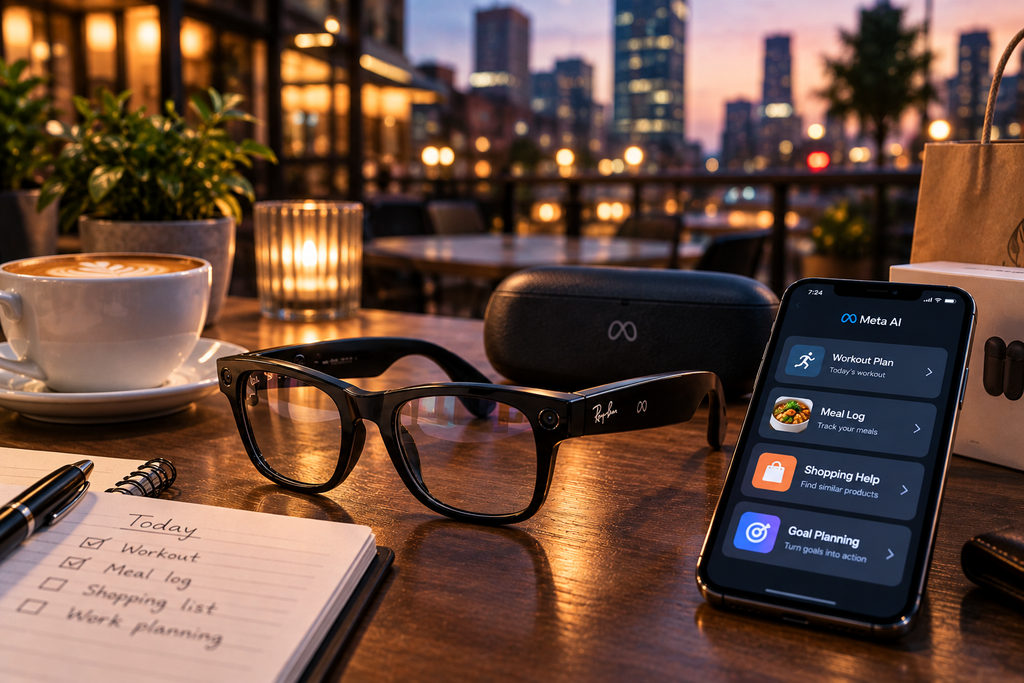
Meta says Muse can help guide a workout, log meals and assist with shopping when the user is looking at products. It can also help turn longer-term goals into actionable plans. Facebook
This makes the glasses less dependent on traditional smartphone interactions and gives the AI assistant a more continuous, hands-free role.
Shopping, Fitness and Everyday Tasks
One of the examples Meta highlights is shopping.
A user looking at a product can ask the glasses for help, allowing Muse to provide assistance without requiring the person to stop and use their phone.
Fitness is another use case. Muse can help guide workouts and support longer-term health goals, while meal logging can make it easier to keep track of daily habits.
These features build on Meta’s existing work to make its AI more capable of planning and following through on tasks. Meta previously introduced AI features that can create plans, work with connected apps and help users stay on track. Facebook
New Accessibility Features
Meta is also expanding the accessibility capabilities of its AI glasses.
One of the most notable additions is Hearing Enhancement, which Meta describes as FDA-cleared software for adults with perceived mild to moderate hearing loss.
Meta says the feature will become available later this year for compatible glasses through a Meta One subscription or as a $149 add-on. Availability and compatibility will depend on the specific glasses and market. The Verge
Meta is also improving how its glasses understand the world around the wearer.
Meta AI will be able to provide more context-rich answers when users ask about something they are looking at. The company says this could provide additional assistance for blind and low-vision users when interpreting their surroundings. The Verge
Another accessibility-related option lets users customize audio balance between their ears, including directing all audio to one side.
Camera Improvements
Meta’s glasses are also receiving camera-related upgrades.
The company announced Dynamic Photo, which captures multiple frames when a user takes a photo and uses Meta AI to suggest the best frame from the group. This is designed to reduce the need to repeatedly take photos to get the right moment. Facebook
Meta also announced Dolby Atmos Capture, which will allow compatible AI glasses to record video with 360-degree spatial audio. Meta says the feature is coming later this year. Facebook
For Ray-Ban Meta Gen 3, Meta is also offering a 12MP camera and 3K Ultra HD video recording. The company says the glasses retain the capture LED that indicates when photos or video are being recorded. Facebook
Navigation Gets More Useful
Navigation is another major area of improvement, particularly for Meta Ray-Ban Display glasses.
Starting later in September in the US and Canada, users will be able to use their voice to request real-time cycling and public transit directions.
The glasses will also be able to use visible surroundings for walking directions. Instead of relying only on street signs, the system can reference things such as buildings, cars or landmarks detected in front of the wearer. The Verge
This is particularly interesting because it connects AI vision with navigation rather than treating the glasses as simply an audio assistant.
More Productivity Features
Meta is also adding several smaller features to its display glasses.
Users will be able to edit photos directly through the glasses’ display, while a new Explore app will help users discover applications.
Meta is also improving the calendar experience and adding phone notification mirroring. The Verge
For calls, Meta Ray-Ban Display glasses will also receive a feature called Hologram, which creates a photorealistic digital representation of the user’s face for calls. Meta says it will initially roll out through WhatsApp Early Access in the US later this fall. The Verge
Meta Is Expanding the Glasses Lineup
Muse is only one part of Meta’s larger glasses strategy.
At Connect, Meta introduced Ray-Ban Meta Audio, its first dedicated audio glasses without a camera. Meta says the glasses weigh 43 grams and can provide up to 12 hours of use on a charge, with another 48 hours available from the charging case. Pre-orders start at $349, with shipments scheduled for October 13. Facebook
Meta also introduced Ray-Ban Meta Gen 3, with a slimmer design, longer battery life, a customizable action button, a 6-microphone array and a 12MP camera.
The broader lineup now includes Ray-Ban, Oakley and Meta-branded glasses, with Meta saying it plans to offer more than 100 options by the end of 2026. Facebook
What Muse Means for Smart Glasses
The Muse announcement shows where Meta is taking its glasses strategy.
The company is moving beyond glasses that simply answer questions or play audio. Muse is designed to help with ongoing tasks and goals, while the glasses provide the hands-free interface.
That combination could make AI more useful in situations where using a phone is inconvenient, such as exercising, walking, shopping or navigating.
However, availability of individual Muse features will vary by device, market and rollout stage. Meta’s announcement should therefore not be interpreted as every feature becoming available on every pair of glasses immediately.
Conclusion
Meta Connect 2026 marks a major expansion of Meta’s AI glasses strategy. Muse is moving from a standalone personal AI agent toward a hands-free assistant that can operate through smart glasses.
Alongside Muse, Meta is adding accessibility features, improved cameras, spatial audio capture, navigation, photo editing and productivity tools.
The larger change is the interaction model: instead of reaching for a phone every time an AI task needs to be completed, Meta wants the assistant to be available through the glasses themselves.
FAQs
What is Meta Muse?
Muse is Meta’s personal AI agent designed to help users with tasks, planning and longer-term goals.
Is Muse coming to Meta smart glasses?
Yes. Meta announced at Connect 2026 that it is bringing Muse to its AI glasses for hands-free use. Facebook
How do you activate Muse on Meta glasses?
Meta says users will be able to activate Muse by saying its name.
What can Muse do on smart glasses?
Meta says Muse can help guide workouts, log meals, assist with shopping and turn longer-term goals into action plans. The Verge
What is Hearing Enhancement?
Meta describes Hearing Enhancement as FDA-cleared software for adults with perceived mild to moderate hearing loss. It is planned for compatible glasses later in 2026. The Verge
Are Meta glasses getting navigation improvements?
Yes. Meta Ray-Ban Display users in the US and Canada will be able to request real-time cycling and public transit directions by voice, with additional improvements to walking navigation. The Verge
Related Articles:
- Muse Can Send Emails, Make Payments and Handle Tasks for You
- GPT-6 Sol and Luna Launch With 50% Lower API Prices
Source Links: