
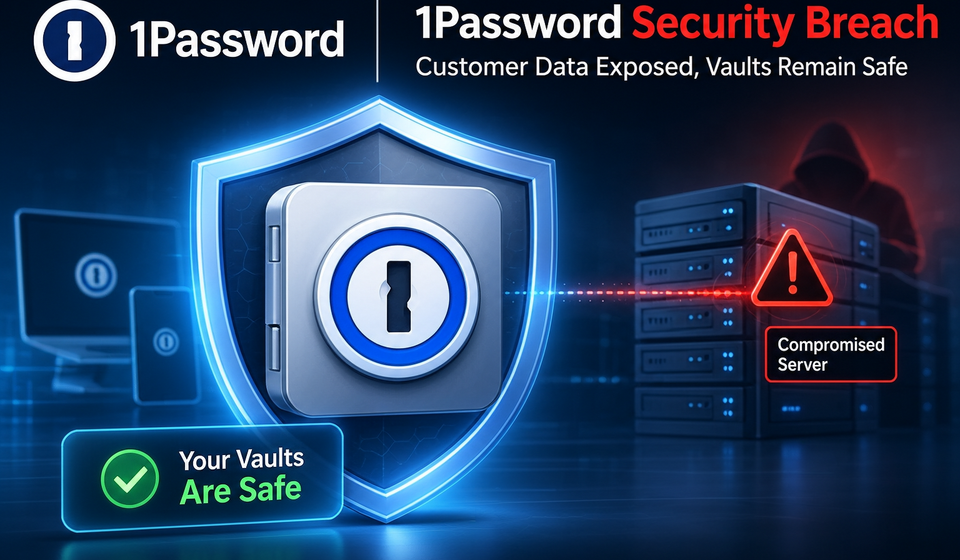
1Password Confirms Security Breach: Customer Data Exposed, Password Vaults Remain Safe
Password manager company 1Password has disclosed a security breach that exposed limited customer account information and internal source code, following the compromise of an employee’s corporate GitHub account. The company published its security incident update on November 25, 2026, confirming that customer names, email addresses and other account metadata were accessed, but saved passwords and encrypted vault contents remained unaffected.
The incident raises concerns about the security of software development infrastructure, particularly because the attacker reportedly used the compromised GitHub account to introduce malicious code into 1Password’s backend services. However, 1Password says its investigation found no evidence that customer vault contents or the encryption keys protecting them were accessed.
How the 1Password Security Breach Happened
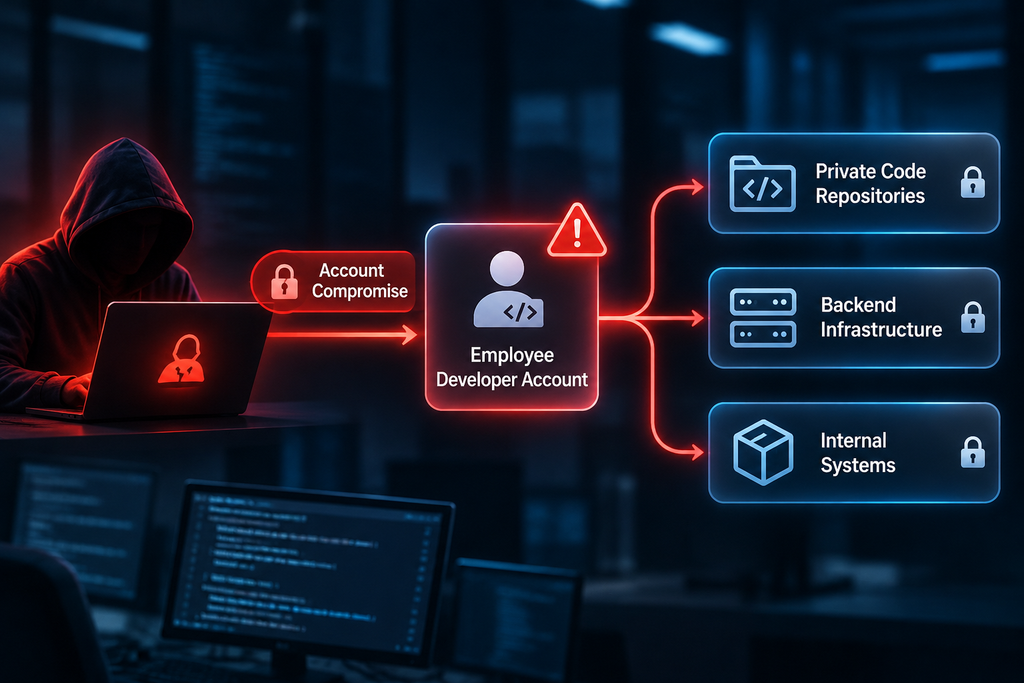
According to 1Password, the company began investigating suspicious activity on November 19, 2026, after detecting signs that an attacker had gained access to an employee’s corporate GitHub account.
The attacker used that account to access private source code repositories and push malicious code to backend services. The injected code then downloaded administrative information associated with a subset of customers. The attacker also accessed the company’s Continuous Integration and Continuous Deployment (CI/CD) environment, which is involved in building and deploying software.
1Password has not publicly identified the attacker or disclosed the exact number of affected customers. It also has not explained how the employee’s GitHub account was initially compromised.
What Information Was Exposed?
The incident involved customer account metadata rather than the contents of password vaults.
Information accessed by the attacker included:
- Customer information: Names and email addresses used to sign in to 1Password.
- Account details: Account and user identifiers, creation dates and last sign-in timestamps.
- Cryptographic metadata: Public keys and Secure Remote Password (SRP) protocol parameters.
- Email tokens: Tokens contained in certain invitation, provisioning and account recovery links.
- Internal information: Numeric version and file identifiers, along with private source code.
1Password also confirmed that the attacker accessed its CI/CD environment. The company said its source code contained no user secrets and that potentially exposed internal infrastructure credentials were rotated or revoked.
For more visit : 1Password – Official Security Incident Update
What Remained Safe?
Vault contents not compromised
1Password says the attack did not expose customer password vaults or the encryption keys protecting them.
| Exposed information | Unaffected information |
|---|---|
| Names and email addresses | Saved passwords |
| Account identifiers | Private vault contents |
| Public keys and SRP parameters | Master/account passwords |
| Certain invitation and recovery tokens | Secret Keys |
| Internal source code | Account recovery keys |
| Non-secret account metadata | 1Password apps and browser extensions |
The distinction matters because 1Password uses an encryption architecture in which customers hold the credentials and keys needed to protect their vault data. The company says it does not store customers’ Account Passwords or Secret Keys, meaning access to its backend systems does not automatically provide access to encrypted vault contents.
Why 1Password Says Customer Passwords Are Safe
1Password uses a zero-knowledge security architecture designed to prevent the company itself from accessing customers’ encrypted vault contents.
Vault protection relies on an Account Password and a unique 128-bit Secret Key. These are not stored by 1Password in a form that would allow the company or an attacker accessing its backend systems to retrieve them.
The exposed public keys and SRP parameters are not sufficient to unlock customer accounts. Similarly, the stolen invitation and recovery tokens cannot independently provide account access. According to 1Password, those tokens also require SSO authentication or a separate verification code sent to the registered email address.
The company has also increased the verification codes used in invitation and recovery emails from six numeric digits to ten alphanumeric characters as a precaution.
For more visit : The Verge – 1Password Data Breach Explained
How 1Password Responded to the Incident
Following the discovery, 1Password implemented several security measures to contain the breach and strengthen its internal systems.
These include:
- Disabling the compromised employee GitHub account and revoking the attacker’s access token.
- Removing malicious access and restoring clean versions of affected backend services.
- Rotating or revoking internal credentials that might have been exposed.
- Strengthening GitHub, CI/CD and endpoint security controls.
- Introducing additional threat detection measures.
- Engaging independent cybersecurity experts to review its containment and remediation work.
The company also reported that its internal investigation found no evidence of account takeovers involving the exposed provisioning tokens.
What Should 1Password Users Do Now?
Although 1Password says customers do not need to change their account passwords or Secret Keys, users should remain cautious about suspicious communications.
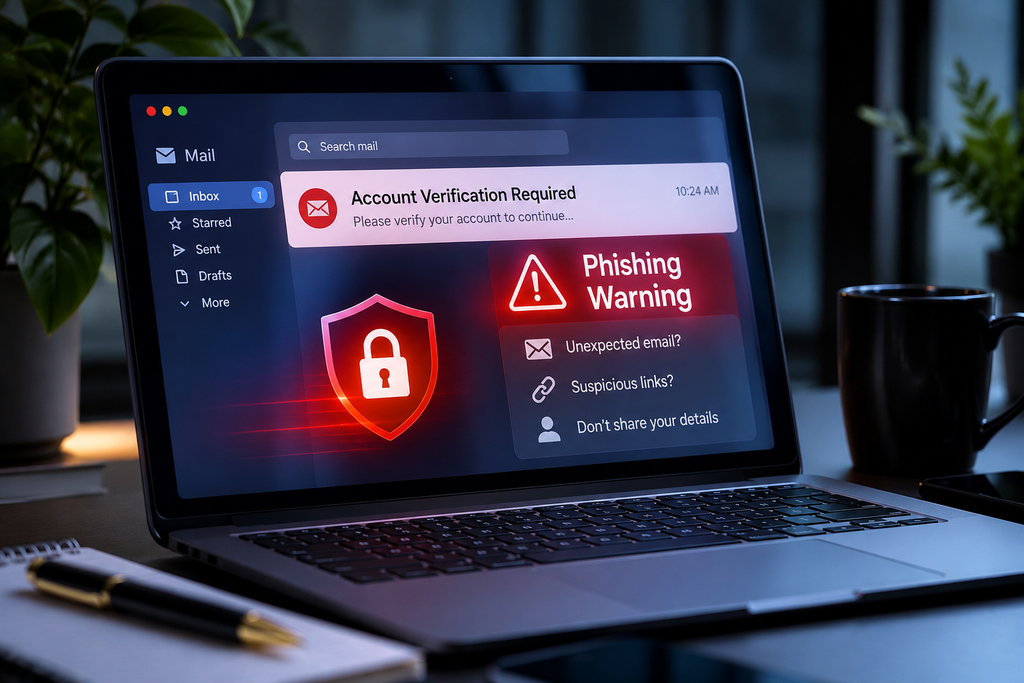
The exposure of names and email addresses could help attackers create convincing phishing messages pretending to come from 1Password.
Users should follow these precautions:
- Watch for phishing emails: Be careful with unexpected account recovery requests, invitations and security alerts.
- Use official login channels: Open the 1Password application directly or manually enter its official website address instead of following unexpected email links.
- Protect your Secret Key: Never share your Account Password or Secret Key through email, text messages or phone calls.
- Check unusual account activity: Pay attention to unexpected recovery requests or unfamiliar login notifications.
1Password specifically advises users that it will never ask them to provide their Account Password or Secret Key through unexpected communications.
Why This Breach Matters Beyond Passwords
The 1Password incident highlights an important cybersecurity risk: even companies built around protecting sensitive information depend on development tools, employee accounts and software deployment systems.
The attacker reportedly did not need to break the encryption protecting customer vaults. Instead, the compromised employee GitHub account provided a route into internal systems, allowing malicious code to be introduced into backend services.
This demonstrates why protecting software development environments is just as important as securing customer-facing applications. Strong account authentication, restricted repository permissions, CI/CD monitoring and rapid credential rotation all play important roles in preventing similar attacks.
For 1Password users, the immediate concern is less about stolen passwords and more about targeted phishing attempts using exposed customer information. The company says vaults remain secure, but users should still treat unexpected security messages carefully.

Final Take Away
1Password’s breach shows that even security-focused companies are not immune to attacks targeting their internal infrastructure. Although saved passwords and encrypted vaults remain unaffected according to the company, the exposure of customer information creates a potential phishing risk. The incident is another reminder that cybersecurity depends on protecting the entire software development process, not just the final product.
Also read
- OpenAI and Cisco Introduce Shirudo to Protect Linux Systems From Cyberattacks
- Anthropic Shares Fall Below $83 IPO Price Amid AI Valuation Fears
- Microsoft Declares Code Red After Major Global Outage