
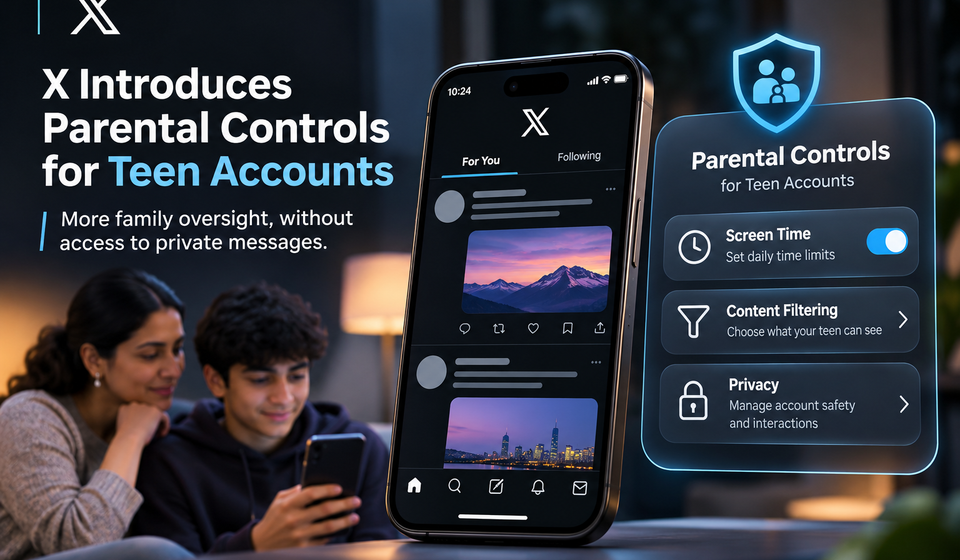
X Introduces Parental Controls for Teen Accounts, but Parents Cannot Read Private Messages
X has introduced parental controls for teenagers aged 13 to 17, allowing parents and guardians to manage screen time, restrict content recommendations and supervise some account interactions. However, the new feature does not let parents read private messages, view search history or see which posts and videos their teenagers have viewed.
Announced through X’s Safety account on November 25, the feature gives families more options to manage teenagers’ activity while keeping the teenager as the account owner. Both the parent and teenager must agree to link their accounts before supervision begins.
What can parents control with X’s new parental controls?
Once the accounts are linked, parents can manage several parts of a teenager’s experience on X.
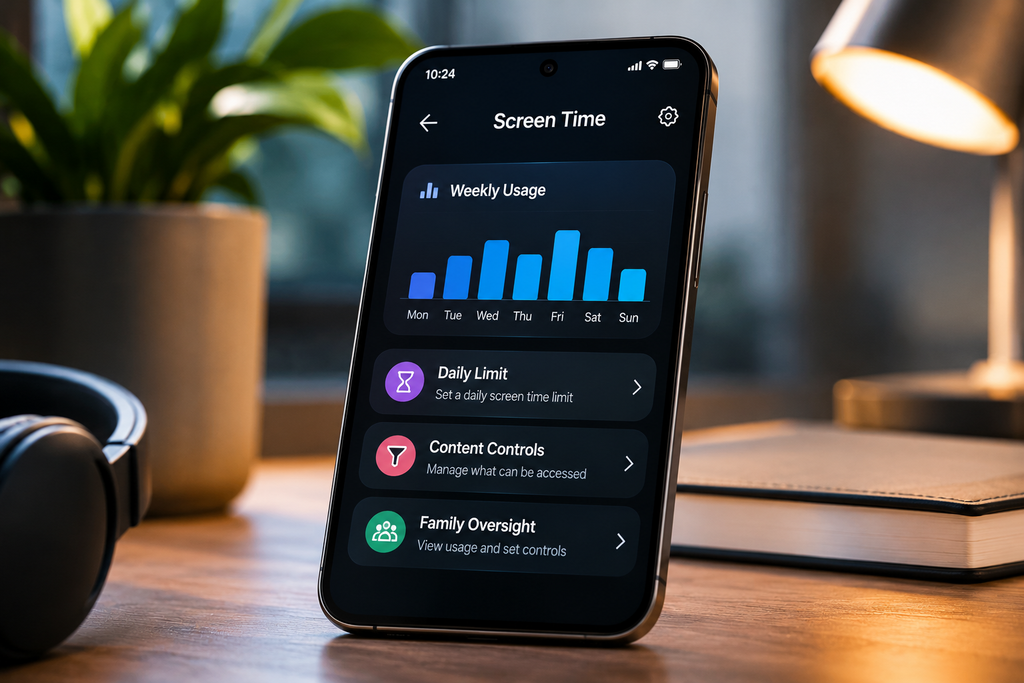
- Screen time limits: Parents can check how much time their teenager spent on X over the previous seven days and set a daily usage limit.
- Follower approval: Parents can require approval before new accounts follow the teenager. Enabling this option also makes the teen’s account private.
- Content recommendations: Parents can restrict For You recommendations and videos to accounts the teenager already follows.
- Content filtering: Specific words can be filtered, and sensitive media can be turned off.
- Direct messages: Parents can decide who is allowed to send messages to the teenager.
- Chat contacts: Parents can see which accounts the teenager has had one-to-one conversations with, without seeing the messages themselves.
The controls also cover additional privacy settings, including photo tagging, account discoverability through email addresses or phone numbers, and location information on posts.

Parents cannot read messages or view search history
X has placed clear limits on what parents can access. They cannot read private messages, check what their teenager searches for, or see which posts and videos they view.
Parents also cannot sign in to the teenager’s account, change its password, or publish posts and interact with other users on the teenager’s behalf.
This distinction is important: parents can see which accounts their teenager has chatted with, but not the contents of those conversations. The platform also records changes made through parental controls, and teenagers can see that activity themselves.

How does account linking work?
The supervision process requires participation from both sides.
- The parent or guardian opens Parental Controls and creates an invitation using a QR code or link.
- The teenager opens the invitation while signed in to their X account.
- X explains what the parent can and cannot access.
- The teenager can accept or decline the request.
An invitation expires after 72 hours. One parent or guardian can supervise up to five teenagers, while each teenager can be linked to only one parent or guardian at a time. Teenagers can also request to end supervision, although the parent or guardian decides whether to approve that request.
For More Visit : X’s official Parental Controls Help Centre
Teen accounts already have some safety protections
X says teen accounts already receive certain protections by default. These include protected mode, restrictions on sensitive media and a ban on targeted advertising.
The new parental controls add more options on top of those existing measures. They are intended for users aged 13 to 17, although the minimum age to use X can be higher in countries where local laws require it.
More parental oversight, but not complete supervision
X’s new controls give parents practical tools to manage screen time, unwanted interactions and some content exposure. The ability to control who can send direct messages and approve new followers could be particularly useful for families concerned about unwanted contact.
However, the system depends on the teenager agreeing to supervision. That makes it different from controls that parents can activate independently. It also means the feature is not a complete monitoring solution: parents cannot inspect private conversations or browsing activity.
The approach attempts to balance parental involvement with teenage privacy. Whether it meaningfully improves safety will depend on how families use the controls and how effectively X enforces its existing protections.
For families, the most useful change may not be access to a teenager’s private activity, but the ability to set boundaries around time, content and contact while keeping those boundaries visible to the teenager.
For More Visit : X Safety announcement
Also read
- OpenAI and Cisco Introduce Shirudo to Protect Linux Systems From Cyberattacks
- Anthropic Shares Fall Below $83 IPO Price Amid AI Valuation Fears
- 1Password Confirms Security Breach: Customer Data Exposed, Password Vaults Remain Safe