

OpenAI and Cisco Introduce Shirudo to Protect Linux Systems From Cyberattacks
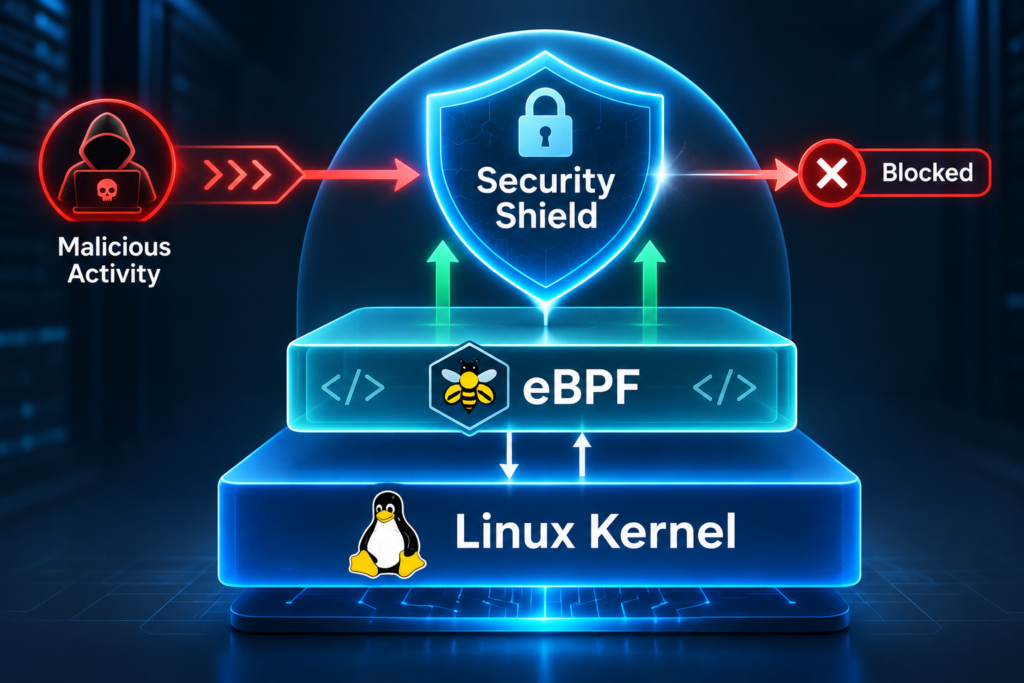
OpenAI and Cisco have introduced Shirudo, an open-source security project designed to protect running Linux systems from cyberattacks while organisations prepare and deploy permanent software patches. Announced on November 23, 2026, the project aims to block attempts to exploit vulnerabilities without requiring affected services to shut down or restart.
The project addresses a common cybersecurity challenge: organisations can discover a critical vulnerability but still need days or weeks to test and deploy a permanent fix. During that period, attackers may attempt to exploit systems that remain unpatched.
What Is Shirudo and How Does It Work?
Shirudo uses Extended Berkeley Packet Filter (eBPF), a Linux technology that allows small programs to run at specific points inside the operating system kernel. This gives security teams a way to monitor system activity and apply targeted protections without changing an application’s source code or restarting its services.
These temporary protections are called shields. Instead of blocking an entire system operation, a shield can target the specific behaviour associated with a vulnerability while allowing legitimate application activity to continue.
For example, shutting down an application to prevent a particular exploit could also interrupt normal customer requests. Shirudo is designed to help security teams avoid that trade-off.
The project also supports AI agents that can investigate vulnerabilities, generate potential shields and test their effectiveness against exploits and real application workloads. However, security teams retain control over which protections are approved and deployed.
Also read : Cisco – Launching Shirudo
OpenAI Demonstrates Shirudo Using Codex
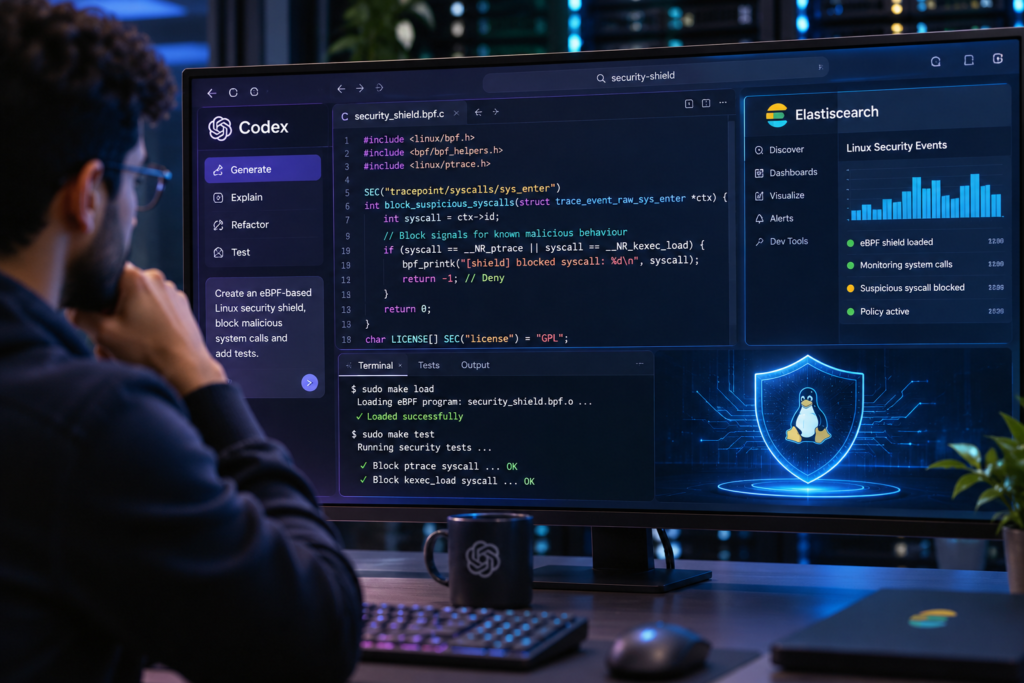
One of the most important parts of the announcement is a controlled demonstration involving OpenAI’s Codex coding agent.
In the test, Codex generated a security shield targeting a Java4Shell exploit attempt against a running Elasticsearch service. The shield added an input check to Java’s Base64 decoder to reject malicious input.
The protection blocked the attempted exploit while Elasticsearch continued operating without requiring a restart. This demonstration illustrates how AI-assisted security tools could help organisations respond to vulnerabilities while permanent fixes are being prepared.
Shirudo also includes several security mechanisms:
- Cryptographically signed shields: Help verify that a protection is trusted before it is loaded.
- eBPF verification: Checks programs against Linux kernel safety rules.
- Hardware-backed verification: Uses a Trusted Platform Module (TPM) to support records of protections being loaded or removed.
- Live protection: Allows targeted safeguards to be applied without restarting protected services.
These mechanisms are intended to make temporary security protections more controlled and verifiable.

Why Shirudo Matters for Enterprise Cybersecurity
Shirudo could be particularly useful for organisations that operate large Linux environments, cloud infrastructure and applications that cannot easily afford downtime.
For example, an online service, financial platform or enterprise application may handle thousands of requests continuously. Restarting critical services to apply emergency security measures can create operational disruption. At the same time, leaving a vulnerability unprotected while waiting for a permanent patch can increase security risks.
Shirudo aims to provide an additional layer of protection during this period.
However, it is important to understand that Shirudo is not a replacement for permanent software updates or security patches. Its purpose is to help protect systems while those fixes are being developed, tested and deployed. Organisations will still need proper vulnerability management, monitoring and patching processes.
Can AI Make Cybersecurity More Proactive?
The interesting part of Shirudo is not simply that OpenAI and Cisco have introduced another cybersecurity tool. It is the way the project combines AI-assisted vulnerability investigation with operating-system-level protection.
Traditional security processes often depend on security teams identifying vulnerabilities, developing mitigation rules, testing them and deploying updates. AI agents could help accelerate parts of this process by investigating vulnerabilities and generating potential protections.
But generating a security rule is not the same as proving that it is safe. A poorly designed shield could block legitimate application activity or introduce unexpected behaviour.
This is why Shirudo’s testing and approval process matters. AI can help prepare and evaluate protections, but human operators retain control over deployment. That distinction will be important as organisations consider giving AI agents more responsibility in their security infrastructure.
For Indian businesses running Linux-based servers, cloud applications and enterprise workloads, the project represents an interesting development. However, its practical value will depend on compatibility, reliability, security testing and adoption by infrastructure teams.
Also read : OpenAI – Introducing Shirudo
Shirudo Is Open Source
OpenAI and Cisco are releasing Shirudo as an open-source project, inviting developers, security researchers and infrastructure operators to examine its implementation and contribute improvements.
The project uses the BSD 2-Clause licence, while its eBPF programs have BSD and GPL licensing. Interested developers can explore the implementation and documentation through the official project repository.
This open development approach could help the project improve through independent testing, contributions and feedback from the Linux security community.
Final take away
Shirudo represents a promising approach to protecting Linux infrastructure during the time between discovering a vulnerability and deploying its permanent fix. Its combination of eBPF, AI-assisted security development and human-controlled deployment addresses a real challenge for organisations that cannot afford unnecessary service interruptions.
However, its long-term value will depend on how reliably its shields work across different systems and real-world workloads. For now, Shirudo is an important step towards more adaptive cybersecurity, rather than a replacement for established security practices.
For More
- Microsoft Declares Code Red After Major Global Outage
- Jio Happy New Year 2.0 Plans: ₹399 and ₹3,999 Recharge Benefits
- Jensen Huang Returns as NVIDIA CEO 11 Days After Resigning
Editorial note before publishing: The author and editor fields must be confirmed in WordPress. The article is based primarily on the November 23 official announcements from OpenAI and Cisco. It does not claim that Shirudo is a complete replacement for patching or that it guarantees protection against all attacks.