

The Legend of Zelda: Ocarina of Time Remake – New Features & Price
The Legend of Zelda: Ocarina of Time is returning with a major modern makeover for the Nintendo Switch 2. The remake brings updated visuals, fully voiced cutscenes, orchestral music and improved gameplay controls to one of the most celebrated adventures in Nintendo history.
Rather than simply upgrading the graphics, Nintendo has reworked several aspects of the original experience, including the camera system, movement controls and item selection. It also introduces new features such as the Hall of Fallen Foes and ZELDA NOTES, while retaining the familiar story and dungeon structure that made the 1998 classic so memorable.
From its redesigned Hyrule environments to the ability to play Ocarina melodies using the Switch 2 microphone, there’s plenty for longtime fans and newcomers to discover. Here’s everything you need to know about the Ocarina of Time remake, including its new features, gameplay improvements, release date and price.
A New Look at Hyrule: Visuals, Voice Acting and Music
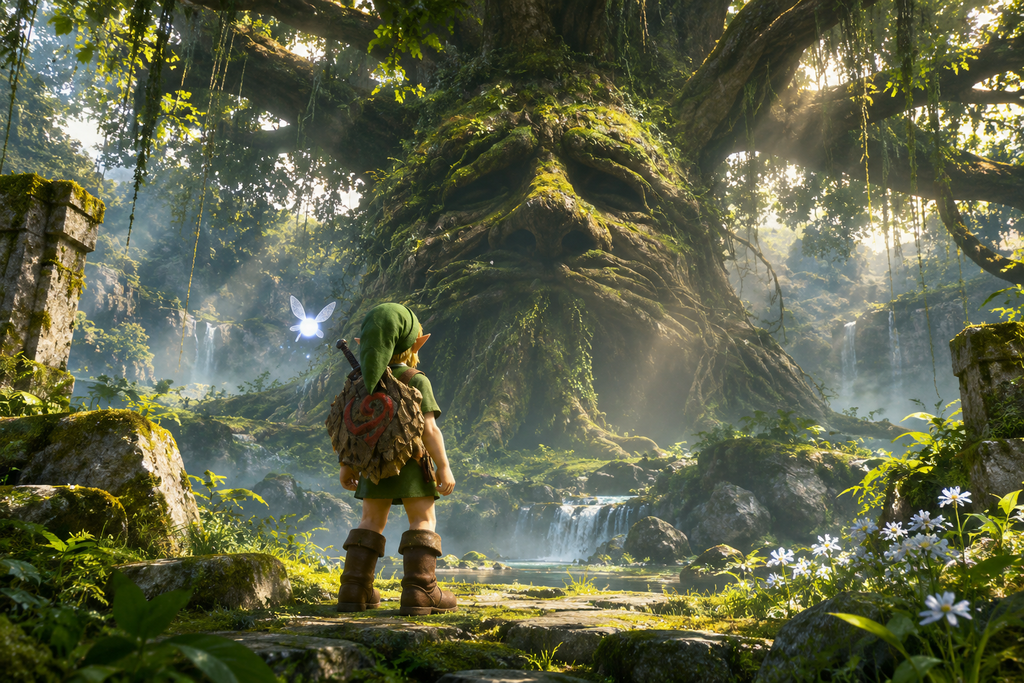
The remake has been rebuilt visually for Nintendo Switch 2, with detailed environments, modern lighting, improved textures and redesigned locations. Hyrule Castle Town, dungeons and familiar areas now feel more immersive, while retaining the atmosphere of the original adventure.
Nintendo has also introduced fully voiced cutscenes and expanded dialogue, giving important story moments more depth. The soundtrack has received full symphonic orchestral arrangements, bringing Koji Kondo’s memorable compositions to life with a richer sound.
Modern Camera and Improved Controls
One of the most noticeable changes is the introduction of full third-person camera control. Players can now move the camera freely using the right analogue stick instead of relying on the original fixed camera angles.
Link also has a dedicated jump button, giving players more direct control over movement. Ranged weapons and items are easier to use with the updated interface, while quicker item selection reduces the need to repeatedly open the pause menu.
The remake also makes exploration more comfortable by reducing Navi’s frequent interruptions. She remains part of the adventure but is less intrusive during gameplay.
Play the Ocarina Using Your Voice
The Ocarina remains central to the adventure, but Nintendo has introduced an interesting new way to interact with it. The Switch 2’s built-in microphone allows players to hum a melody or play an actual instrument, letting Link respond with the corresponding in-game song.
Players can still use traditional controller inputs, so the microphone feature is an additional option rather than a requirement. This makes familiar melodies feel more interactive and gives the remake a distinctive feature.
New Features and Quality-of-Life Improvements
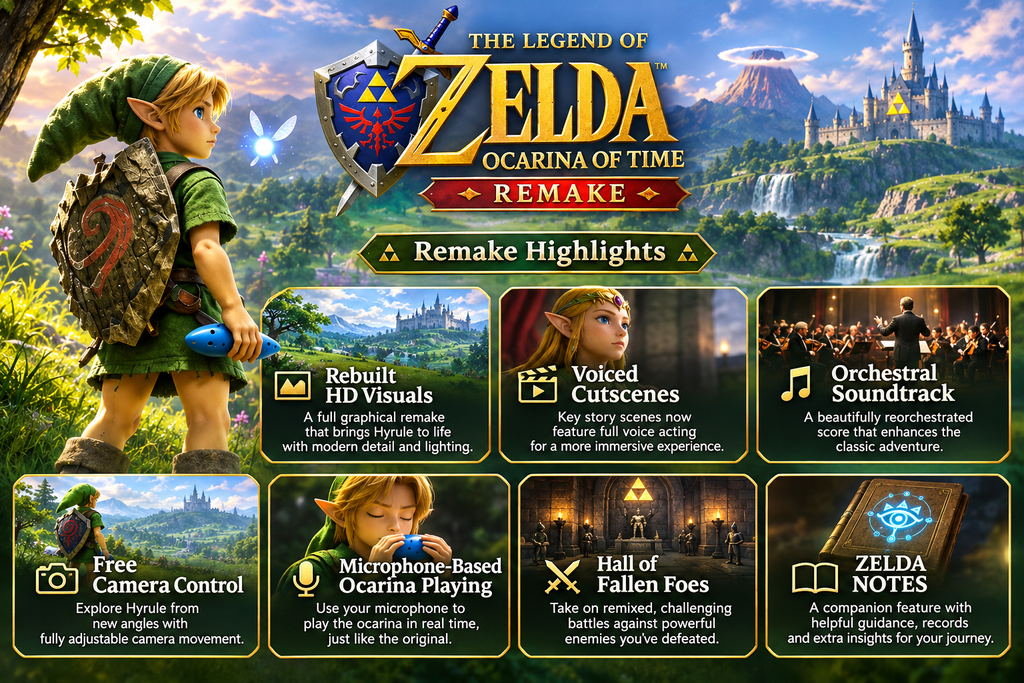
Nintendo has added several features to make the adventure more convenient without changing its core identity.
- Hall of Fallen Foes: A new location where players can revisit defeated enemies and challenge powerful opponents again.
- Fairy Thoughts: Players can discover scattered fairy thoughts around Hyrule to learn additional details about the world.
- ZELDA NOTES: The companion service in the Nintendo Switch App provides extra activities and ways to engage with the game, including location-based challenges, achievements and music-related features.
- Improved Item Access: Important equipment is easier to select, reducing interruptions during exploration and dungeon puzzles.
- Smoother Exploration: Updated camera controls and gameplay adjustments make familiar locations and challenges easier to navigate.
Nintendo also released software update version 1.1.1 on November 4, adding ZELDA NOTES support and addressing several gameplay issues.
Price and Availability
The Legend of Zelda: Ocarina of Time is available exclusively on Nintendo Switch 2 from November 5, 2026. Nintendo lists the US digital version at $59.99. Regional pricing may differ, so buyers should check their local Nintendo eShop for the applicable price.
Conclusion
The Legend of Zelda: Ocarina of Time’s return on Nintendo Switch 2 is a major release for the franchise’s 40th-anniversary year. With rebuilt visuals, improved controls, voiced cutscenes, orchestral music and new features such as Hall of Fallen Foes and ZELDA NOTES, Nintendo has given the 1998 classic a substantial modern upgrade. Rather than replacing the original adventure with an entirely different experience, the remake focuses on making its beloved story and gameplay more enjoyable for a new generation.
Frequently Asked Questions
1. What is new in the Ocarina of Time remake?
It features upgraded graphics, voice acting, orchestral music and improved controls.
2. Is Ocarina of Time available on Switch 2?
Yes, it launched exclusively on Nintendo Switch 2, according to the article.
3. What is the game’s price?
The US digital version costs $59.99.
4. Does the remake feature voice acting?
Yes, it includes fully voiced cutscenes and expanded dialogue.
5. Can you play the Ocarina using a microphone?
Yes, players can hum melodies or play an instrument using the Switch 2 microphone.
6. Does the remake have free camera controls?
Yes, players can control the camera using the right analogue stick.
7. What is Hall of Fallen Foes?
It’s a new area where players can challenge previously defeated enemies.
8. What is ZELDA NOTES?
It’s a companion service offering extra activities and features through the Nintendo Switch App.
9. Does the remake change the original story?
No, it preserves the original story and familiar dungeon structure.
10. Is the remake suitable for new players?
Yes, updated controls and quality-of-life improvements make it more accessible to newcomers.
Suggestions
- PS5 Black Friday Deals 2026: Best Offers & Big Discounts
- Vivo Buds Clip Launched: Exciting Open-Ear Design & 42-Hour Battery
- Garmin ECG App Launches in India: Check Your Heart Rhythm in 30 Seconds
Source
- Nintendo – Official Launch Announcement
- Nintendo – Overview Trailer and Features
- Nintendo Life – Game Review
- Nintendo – Version 1.1.1 Update Notes