iPhone vs Android: The Truth About Which Phone Is Better
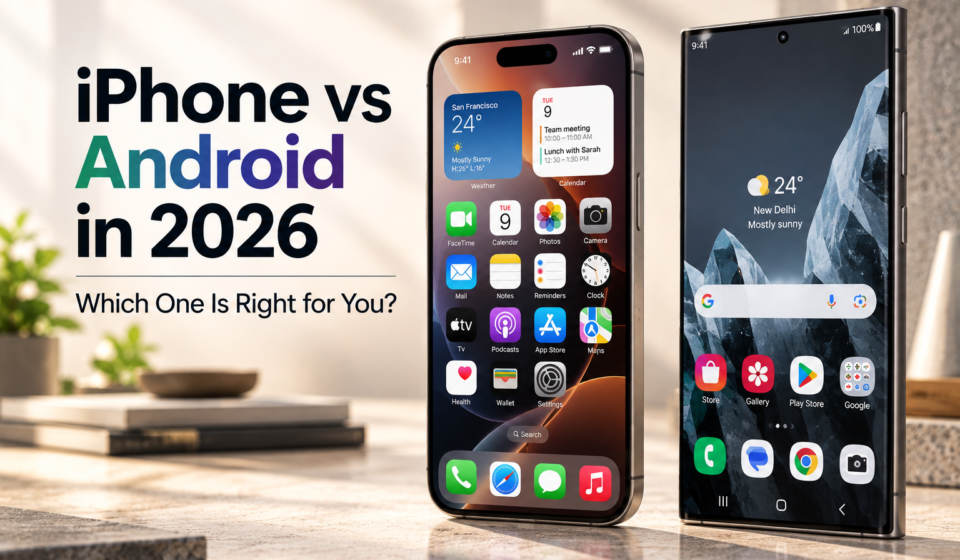
The iPhone vs Android debate has been going on for years, but choosing between them in 2026 is more complicated than simply comparing cameras, processors or prices. Both platforms offer powerful smartphones, advanced AI features, excellent displays and capable cameras. Yet the experience can feel very different depending on the phone you choose.
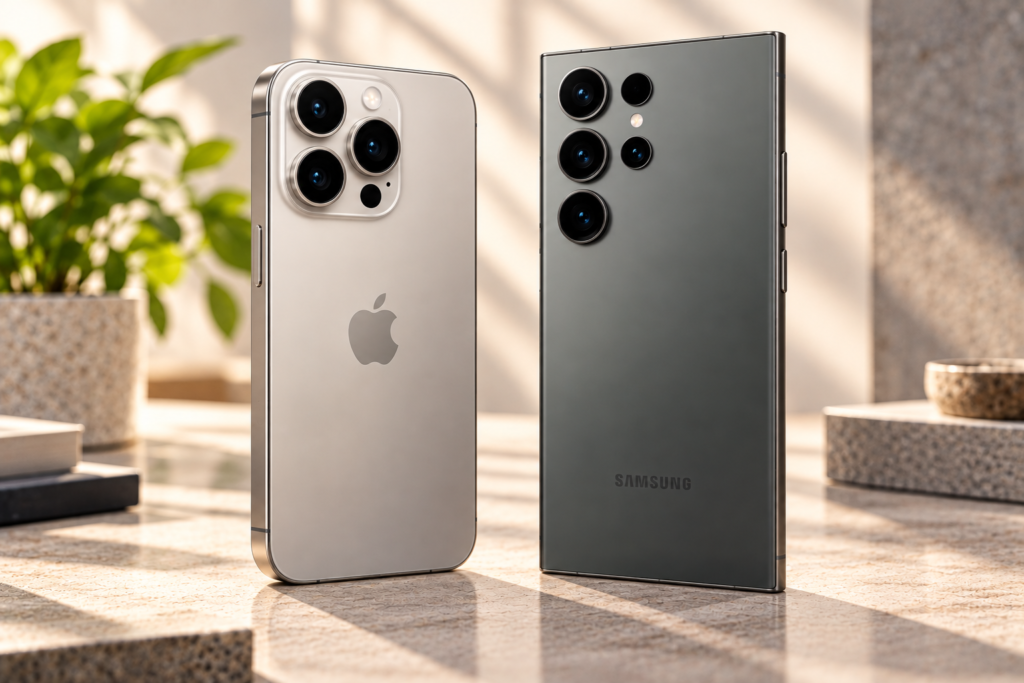
Apple controls the iPhone’s hardware and iOS, creating a closely integrated experience. Android, on the other hand, powers smartphones from brands such as Samsung, Google, OnePlus, Xiaomi and Motorola. This gives buyers more choices in terms of design, specifications and price.
So, which phone is actually better? The truth is that neither platform wins every category. The differences become clearer when you look at how you use your phone every day.
iPhone vs Android: The Biggest Difference
The main difference is how each platform approaches the smartphone experience.
Apple designs iPhones around its own hardware, software and services. This creates a relatively consistent experience across compatible devices, particularly when an iPhone is used alongside a Mac, iPad or Apple Watch.
Apple’s Continuity features let users share files through AirDrop, copy and paste across devices, continue tasks with Handoff and use supported iPhone features from a Mac. These connections can be especially useful for people already using Apple products. (Apple)
Android follows a different approach. Multiple manufacturers build phones using the platform, resulting in a much broader selection of devices. You can choose an affordable smartphone, a premium camera phone, a foldable or a gaming-focused model.
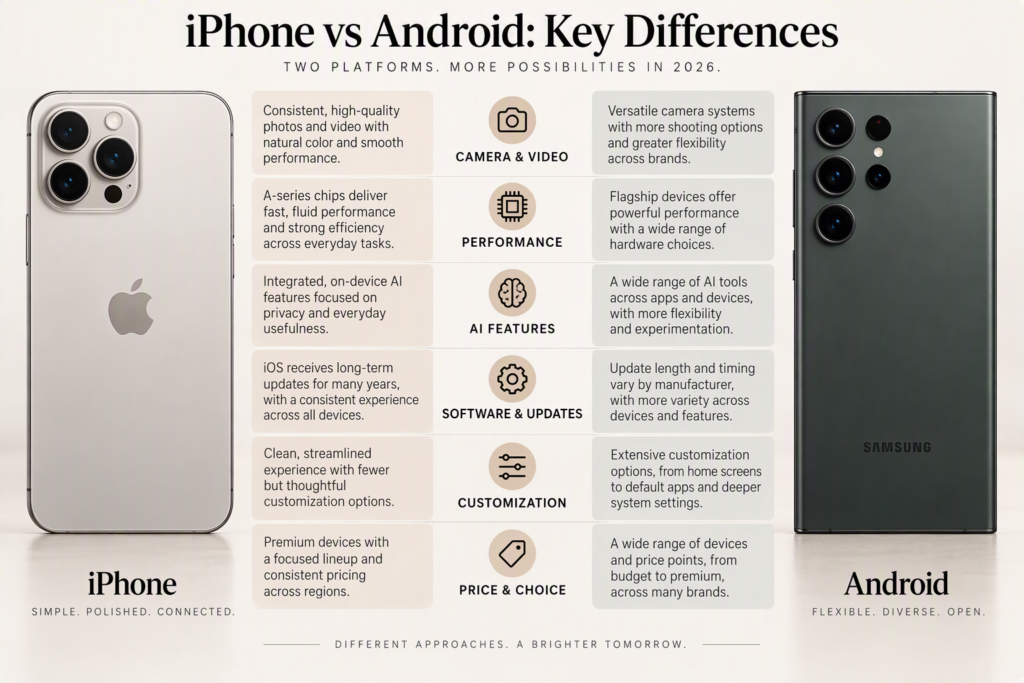
The real difference is consistency versus choice. iPhone offers Apple’s controlled ecosystem, while Android gives you more hardware options and different software experiences.
Which Has Better Performance?
Both platforms are capable of delivering excellent performance.
Current iPhones use Apple’s A-series processors, which are designed to work closely with iOS. This integration helps Apple optimize everyday responsiveness, demanding applications and supported games.
Android phones use processors from manufacturers such as Qualcomm, MediaTek and Google. Their performance varies considerably, from entry-level devices to premium smartphones designed for intensive gaming and multitasking.
Some Android gaming phones also include advanced cooling systems, unusually high-refresh-rate displays and dedicated gaming controls.
For everyday activities such as browsing, messaging, photography and streaming, both platforms can feel fast. When comparing flagship phones, the exact processor, memory, thermal management and software optimization matter more than the operating system alone.
iPhone vs Android: Which Has the Better Camera?
Camera quality is one area where the specific phone matters more than the brand.
iPhones are popular among people who value consistent photography and straightforward video recording. Apple’s approach focuses on delivering reliable results without requiring users to adjust numerous settings.
Android offers greater variety. Samsung emphasizes features such as optical zoom and versatile camera systems, while Google uses computational photography and AI processing to improve images. Other manufacturers focus on portrait photography, high-resolution sensors or specialized camera hardware.
Video creators should compare stabilization, recording formats, microphone quality and performance in difficult lighting. Photography enthusiasts should consider zoom quality, night photography and manual controls.
There is no universal winner. A particular Android flagship may outperform an iPhone in one camera category, while the iPhone may produce results that better suit another person’s preferences.
Which Has Better Software and Updates?
Software can have a bigger impact on everyday use than a small hardware difference.
Apple’s iOS provides a consistent interface and integrates closely with Apple’s services. In September 2026, Apple released iOS 27 with new Siri AI capabilities and additional software improvements. (Apple Newsroom)
Android 17, released in June 2026, introduced features including improved multitasking, creator tools and additional security controls. Its rollout varies by manufacturer and eligible device. (Google Android Blog)
Android also allows manufacturers to build their own interfaces and features on top of the platform. This creates more variety, but the update schedule and length of software support can differ between brands and models.
Before buying, check the update commitment for the exact phone rather than assuming every iPhone or Android device receives the same level of support.
iPhone vs Android: Which Has Better AI?
AI has become an important part of modern smartphones, but the available features depend on the device, software version, region and supported language.
Apple’s latest software brings expanded Apple Intelligence features and a new Siri AI experience. These features are designed to make the assistant more capable and integrate AI into compatible system applications. (Apple)
Android has also developed its AI capabilities through Google Gemini and manufacturer-specific tools. On supported devices, Gemini can help with questions, writing, image-related tasks and certain multi-step activities. Samsung, Google and other manufacturers may offer additional AI features exclusive to particular models.
Instead of asking which platform has more AI, check whether the features you would actually use are available on your phone and in your country.
Which Offers Better Customization?
Android generally offers more flexibility when it comes to personalizing the phone.
Depending on the manufacturer, users can change launchers, icon styles, widgets, default applications and other interface elements. Some Android phones also provide gaming modes, advanced multitasking controls and additional system settings.
iOS offers home-screen widgets, customization options and adjustable system settings, but Apple retains tighter control over the overall interface.
If you enjoy changing how your phone looks and behaves, Android provides more options. If you prefer a relatively consistent interface without adjusting many settings, an iPhone may suit you better.
iPhone vs Android: Battery Life and Charging
Battery life is determined by the individual phone rather than the operating system alone.
Some iPhones deliver strong battery endurance through the integration of Apple’s processors, hardware and software. Android manufacturers can equip their devices with larger batteries, faster charging systems and different power-management technologies.
Charging speed also varies significantly. Certain Android smartphones support charging rates that exceed those available on many iPhones, although the actual charging experience depends on the model and compatible charger.
When comparing phones, look at independent battery tests, charging times and your typical daily usage instead of relying only on battery capacity or brand reputation.
Which Gives You Better Value for Money?
Android has a clear advantage in hardware variety. There are Android smartphones at entry-level, budget, mid-range and flagship prices, allowing buyers to prioritize features according to their spending limits.
Apple’s lineup is more concentrated around the premium market, although older models and lower-priced options can provide alternatives.
However, the cheapest phone is not automatically the best value. Software support, camera performance, battery replacement, storage, repair costs and resale value all influence the overall ownership experience.
Compare phones in the same price range and with similar storage capacities. That provides a more useful comparison than placing an entry-level Android device against a premium iPhone.
iPhone vs Android for Gaming and Content Creation
Both platforms can handle demanding mobile games and content-creation applications, but Android offers more specialized hardware choices.
Windows-style gaming features are not relevant to smartphones in exactly the same way, but Android manufacturers do build gaming-focused phones with advanced cooling, high-refresh-rate screens and dedicated controls. Windows 11 gaming technologies should not be confused with mobile gaming capabilities.
For content creators, both platforms support video recording, photo editing and social-media applications. Your choice should depend on the camera hardware, editing apps, storage needs and the desktop devices you use to finish your work.
An iPhone may fit naturally into an Apple-based editing workflow, while an Android phone may make more sense for someone who values hardware choice or already relies on Android-specific services.
So, Which Phone Is Actually Better?
The most useful answer depends on your priorities.
Choose an iPhone if you value Apple’s ecosystem, consistent software experience, straightforward video recording and integration with devices such as a Mac or Apple Watch.
Choose Android if you want a wider range of prices, more customization, specialized gaming hardware or a choice between different manufacturers and camera systems.
If your current phone already works well with your applications and other devices, switching platforms may not deliver a meaningful improvement in every area. Consider the practical benefits before paying for a new ecosystem.
iPhone vs Android: The Final Verdict
The truth about iPhone vs Android is that neither is universally better. Apple offers a closely integrated combination of hardware, iOS and services, while Android provides a wider selection of smartphones and more varied software experiences.
An expensive Android phone can be a better fit than an iPhone for one person, while an iPhone can be the more convenient choice for someone already using Apple’s products. The same is true of cameras, battery life, gaming and AI: the specific device and its features matter.
Before buying, compare your budget, preferred applications, camera requirements, battery expectations and existing devices. The better phone is not the one with the most impressive specifications on paper. It is the one that fits your daily life.
FAQ
- Is iPhone better than Android in 2026?
Neither is universally better. iPhone suits people who value Apple’s ecosystem and software integration, while Android offers more hardware choices and customization.
- Which is better for gaming, iPhone or Android?
Both can run demanding games. Android also offers specialized gaming phones with advanced cooling and high-refresh-rate displays. Actual performance depends on the specific device and game.
- Which has a better camera, iPhone or Android?
It depends on the models being compared. iPhones are popular for consistent video recording, while Android phones offer a wide range of zoom systems, computational photography features and camera configurations.
- Which is more affordable, iPhone or Android?
Android provides a wider range of prices, including budget and mid-range options. Apple’s lineup is more concentrated around premium devices, though lower-priced and older models are also available.
- Should I switch from Android to iPhone or iPhone to Android?
Switch when the new platform offers meaningful benefits for your applications, ecosystem, camera needs or daily workflow. Check app compatibility and data-transfer options before making the change.
Recommendation
- Gaming Laptop vs Normal Laptop: Which One Should You Buy in 2026?
- Top Laptops of 2026 Compared: ASUS, Samsung, HP & Lenovo Buying Guide
- Best TVs Under ₹1 Lakh: 4 Premium TVs You Should Consider
Source
Official websites of Apple and Google