
Apple 2027 Launch Plans: iPhone 18e, MacBook Neo 2 and More
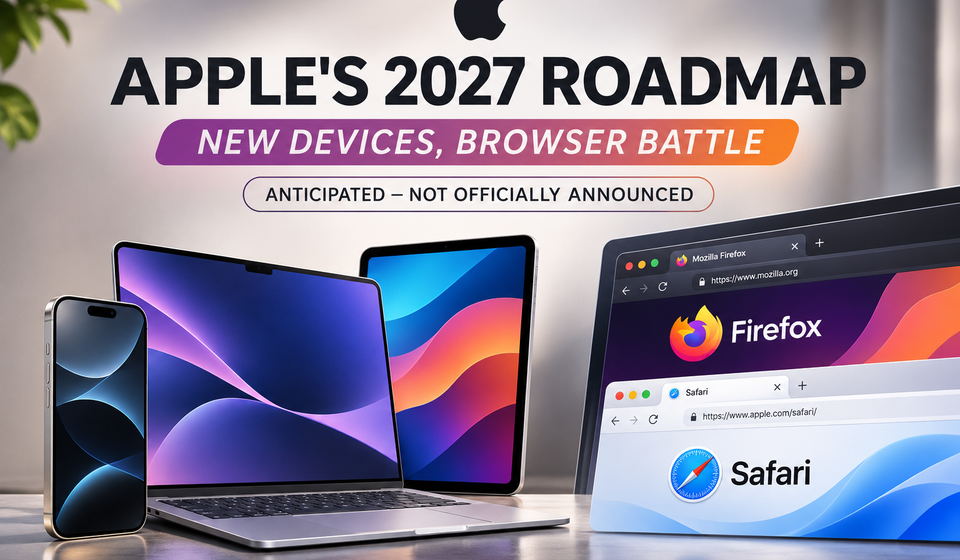
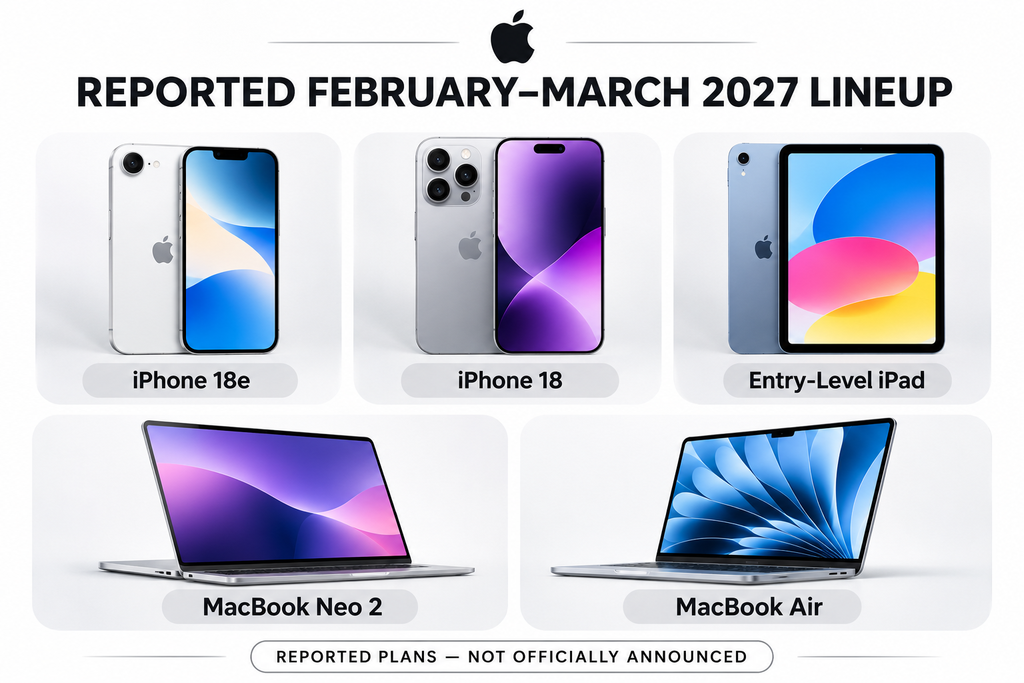
Apple could be preparing one of its busiest product launch periods in recent years. Reports suggest the company may introduce several new devices between February and March 2027, including the iPhone 18e, a second-generation MacBook Neo and an updated entry-level iPad. The company is also expected to refresh other products, potentially spreading announcements across multiple events.
At the same time, Apple is facing criticism from Mozilla over its iPhone browser policies. Mozilla argues that Apple’s restrictions on alternative browser engines prevent it from delivering the full Firefox experience on iOS, even in markets where regulations are intended to encourage competition.
These developments highlight two different challenges for Apple: expanding its hardware lineup for more price-conscious customers and responding to growing pressure over its control of the iPhone software ecosystem.
Key Highlights
- Apple may launch the iPhone 18e, MacBook Neo 2 and a new entry-level iPad in February–March 2027.
- The standard iPhone 18 and an updated MacBook Air are also expected during the spring launch period.
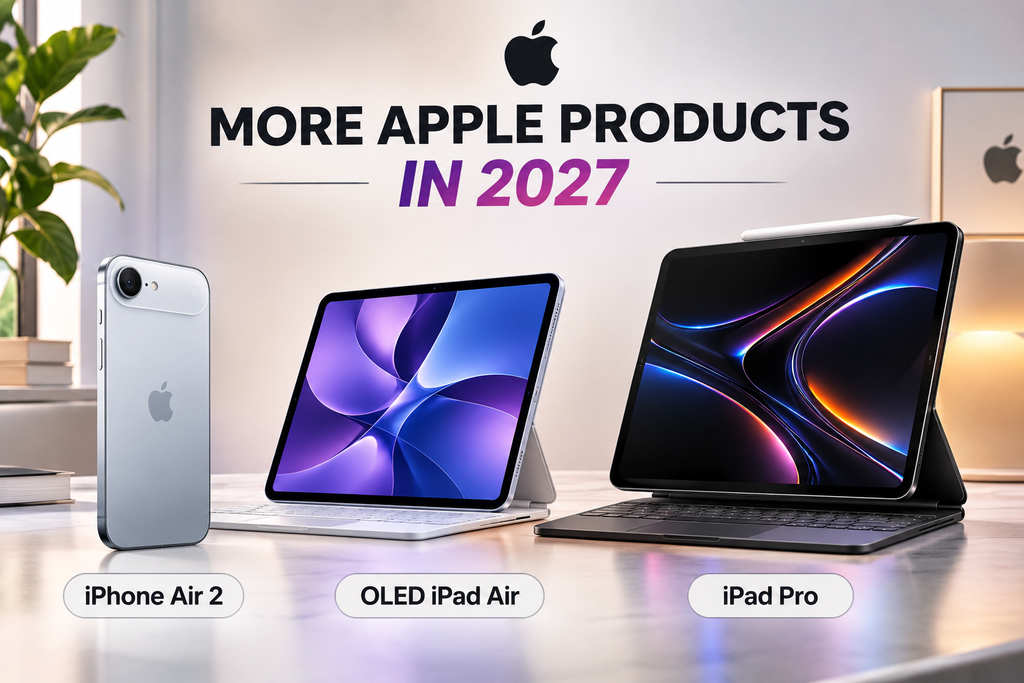
- An OLED iPad Air, refreshed iPad Pro and iPhone Air 2 are reportedly planned for the first half of 2027.
- Apple may spread announcements across smaller events instead of holding one large keynote.
- Mozilla says Apple’s iOS browser-engine rules prevent it from offering the full Firefox experience.
- Mozilla also objects to Apple’s requirement for a separate browser app for alternative-engine support in eligible regions.
Apple’s Early 2027 Hardware Roadmap: What Could Launch?
According to Bloomberg’s Mark Gurman, as reported by Mashable India and FoneArena, Apple is preparing a substantial group of hardware announcements for early 2027. The reported schedule points towards a February–March launch window for several products, with more updates expected later in the first half of the year.
The roadmap is particularly notable because it includes both affordable devices and updates to Apple’s established product lines.
1. MacBook Neo 2
The second-generation MacBook Neo is among the products reportedly planned for February–March 2027. The original Neo line is positioned towards buyers looking for a more affordable way to enter Apple’s laptop ecosystem.
The next model is expected to receive a faster processor and increased RAM. Reports also suggest that Apple Intelligence support could be part of the updated budget-focused lineup.
However, Apple has not officially confirmed the MacBook Neo 2, its processor, memory configurations, pricing or launch date. These details should therefore be treated as reported expectations rather than confirmed specifications.
If the upgrade materialises, the MacBook Neo 2 could become an important option for students, everyday users and customers who want a Mac without paying MacBook Air or MacBook Pro prices.
2. iPhone 18e
Apple is also reportedly preparing the iPhone 18e for the same early 2027 period. The ‘e’ series is aimed at customers who want an iPhone experience at a relatively accessible price.
The reported upgrade could include a faster processor, more RAM and support for Apple Intelligence. These changes would help bring Apple’s newer software capabilities to a more affordable part of its smartphone range.
For Indian buyers, the iPhone 18e could be particularly relevant if Apple maintains a competitive starting price. However, there is currently no confirmed India price, launch date or specification sheet for the device.
3. Updated Entry-Level iPad
An updated standard iPad is also expected in the February–March window. Like the reported MacBook Neo 2 and iPhone 18e, the tablet could receive a newer processor and increased memory.
The entry-level iPad plays an important role in Apple’s lineup because it offers access to iPadOS at a lower price than the iPad Air and iPad Pro.
A processor upgrade and Apple Intelligence support could make the next model more capable for multitasking, studying, entertainment and everyday productivity. However, Apple has not confirmed which chip or memory configuration it may use.
4. Standard iPhone 18 and MacBook Air
The reported early 2027 schedule may not be limited to budget products. Mashable India and FoneArena also point to the standard iPhone 18 and a refreshed MacBook Air arriving around the same spring period.
If accurate, this would represent a change from Apple’s traditional approach of concentrating many major iPhone announcements in the autumn.
The exact specifications and timing of these two products remain unconfirmed. The reports do not provide enough information to establish their final configurations or pricing.
More Apple Products Expected Later in the First Half of 2027
Beyond the February–March window, Apple is reportedly preparing additional updates for the first half of 2027.
| Expected product | Reported development |
|---|---|
| OLED iPad Air | A display technology upgrade |
| Refreshed iPad Pro | A new generation of Apple’s premium tablet |
| iPhone Air 2 | A follow-up to the iPhone Air |
The reported OLED iPad Air could be one of the more notable changes, as OLED technology offers benefits such as deeper blacks and strong contrast compared with conventional LCD displays.
The iPad Pro is also expected to receive an update, although the supplied reports do not establish its final specifications. Meanwhile, the iPhone Air 2 is reportedly part of Apple’s broader first-half roadmap.
With so many products potentially arriving within a few months, Apple may choose to stagger announcements across smaller events rather than introduce everything during a single keynote. Esquire India has also reported on the possibility of a more distributed launch schedule.
Importantly, this entire roadmap remains based on media reports. Apple has not officially announced these products or confirmed their launch dates.
Mozilla Criticises Apple’s iPhone Browser Restrictions
While Apple’s hardware roadmap is attracting attention, the company is also facing criticism over how it manages third-party browsers on iPhones.
In a blog post published on November 20, 2026, Mozilla said Apple’s browser-engine requirements continue to prevent it from bringing the full Firefox experience to iOS users. Mozilla described Apple’s conditions for alternative browser engines as unworkable, arguing that the rules create significant technical and practical barriers for competing browser developers.
The central issue is Apple’s requirement that browsers on iOS use its WebKit engine in most markets. WebKit is the browser engine behind Safari. Mozilla develops its own engine, called Gecko, which powers Firefox on desktop and Android.
Because Firefox on iPhone relies on WebKit rather than Gecko, it cannot offer the same underlying browser technology and feature set available in its desktop and Android versions.
Why Firefox on iPhone Is Different
Firefox users on desktop and Android can access features that are not available in the same way on iOS. One important example is the browser extension ecosystem.
On supported platforms, Firefox users can install extensions that add features such as content blocking, privacy controls and productivity tools. Mozilla specifically points to the limitations this creates for features such as full WebExtensions support, including tools like uBlock Origin.
Another example is Firefox Multi-Account Containers, which allows users to separate different browsing activities into individual containers. This can help people keep work, personal accounts and other online activities separate.
The iOS version of Firefox cannot simply reproduce the full experience because it uses Apple’s browser-engine framework. Mozilla argues that this prevents it from delivering important capabilities that are part of Firefox on other platforms.
The ‘Second Firefox App’ Problem
Apple has introduced pathways for alternative browser engines in certain markets following regulatory changes, including the European Union’s Digital Markets Act (DMA). Japan has also introduced rules requiring Apple to permit alternative browser engines under specified conditions.
However, Mozilla says the practical requirements remain a major obstacle.
According to its November blog post, Mozilla cannot simply update the existing Firefox app to use Gecko. Instead, Apple requires it to develop and distribute a separate application — effectively a second version of Firefox.
That would create a difficult migration process for existing users. People would need to download the new application and manually move their bookmarks, passwords and browsing history. They would also have to switch from the Firefox app they already use.
Mozilla argues that many users could abandon the process because of the additional steps and inconvenience. It also says the conditions create a level of friction that would make it difficult for an alternative browser to compete effectively.
Regional Restrictions Create More Work for Developers
Mozilla has also raised concerns about the regional requirements attached to alternative browser engines.
The regulatory pathways are not universally available across all markets. Developers must meet Apple’s eligibility and technical conditions, and testing or development may be restricted to devices physically located in eligible regions.
For browser companies, this can mean maintaining different versions and development processes for different markets. That adds complexity and cost, particularly for organisations that want to offer the same browser experience worldwide.
Mozilla’s wider argument is that allowing alternative engines in theory is not enough if the conditions make it difficult for developers to release them in practice. It says that, despite the regulatory changes, no non-WebKit browser has successfully launched on iOS under these arrangements.
What Apple’s Browser Rules Mean for iPhone Users
For everyday users, the debate is about more than which browser icon appears on the home screen. Browser engines influence performance, compatibility, privacy features, extensions and the tools developers can build.
If alternative engines become genuinely available, iPhone users could eventually have more meaningful choices between browsers with different technologies and capabilities. Firefox users, for example, could potentially get a closer experience to the Gecko-powered browser available on other platforms.
However, Apple’s approach reflects its emphasis on controlling the software environment and applying consistent security requirements. Alternative browser engines introduce additional technical considerations, and Apple has established conditions that developers must satisfy before using them.
The question is whether those conditions provide necessary safeguards or create unnecessary barriers to competition. Mozilla believes the current system does the latter. Apple has not, in the supplied material, provided a response to Mozilla’s latest criticism.
Conclusion
Apple could have a busy start to 2027, with the iPhone 18e, MacBook Neo 2, updated entry-level iPad and other products reportedly planned for the first half of the year. The company may also divide its announcements into several smaller launch events.
At the same time, Mozilla’s criticism puts Apple’s iOS browser policies back under scrutiny. The disagreement centres on whether alternative browser engines can compete fairly on the iPhone and whether users can access the same Firefox features available elsewhere.
For now, Apple’s product plans remain unconfirmed, while Mozilla’s objections underline a continuing debate over competition and control within the iPhone ecosystem.
FAQs
1. Which Apple products are expected to launch in February or March 2027?
Reports suggest Apple may introduce the iPhone 18e, standard iPhone 18, updated entry-level iPad, second-generation MacBook Neo and refreshed MacBook Air during this period.
2. Will the MacBook Neo 2 support Apple Intelligence?
Apple Intelligence support is expected to be part of the broader budget-device upgrades, but Apple has not confirmed the MacBook Neo 2’s specifications or compatibility.
3. Why is Mozilla criticising Apple?
Mozilla says Apple’s browser-engine restrictions prevent it from offering the full Gecko-powered Firefox experience on iPhones, including features available on desktop and Android.
4. What is the ‘second Firefox app’ issue?
Mozilla says Apple’s conditions would require it to create a separate iOS app for Gecko rather than update the existing Firefox app. Users would then have to migrate their bookmarks, passwords and browsing history manually.
5. Has Apple confirmed its early 2027 launch plans?
No. The product schedule is based on reports attributed to Bloomberg’s Mark Gurman. Apple has not officially announced these devices or their launch dates.
Also Read
- WhatsApp View Once Text Messages: 5 Key Details for iPhone Users
- Samsung One UI 9.5 Beta: 5 Exciting Features Arrive in India
- Salesforce Layoffs: Shocking Job Cuts Hit US & India Teams 2026
Source
- Mozilla – Why There Are Still No Non-WebKit Browsers on iOS: https://blog.mozilla.org/en/mozilla/internet-policy/apple-ios-browser-engine-rules/
- Bloomberg – Mark Gurman’s Power On Newsletter: https://www.bloomberg.com/news/newsletters/2026-11-22/apple-risks-losing-the-ai-agent-war-with-an-outdated-playbook
Editorial note: Apple’s product roadmap is based on reporting and remains unconfirmed. Mozilla’s browser-policy criticism represents the organisation’s position; Apple’s response to this specific criticism is not established in the supplied material.