
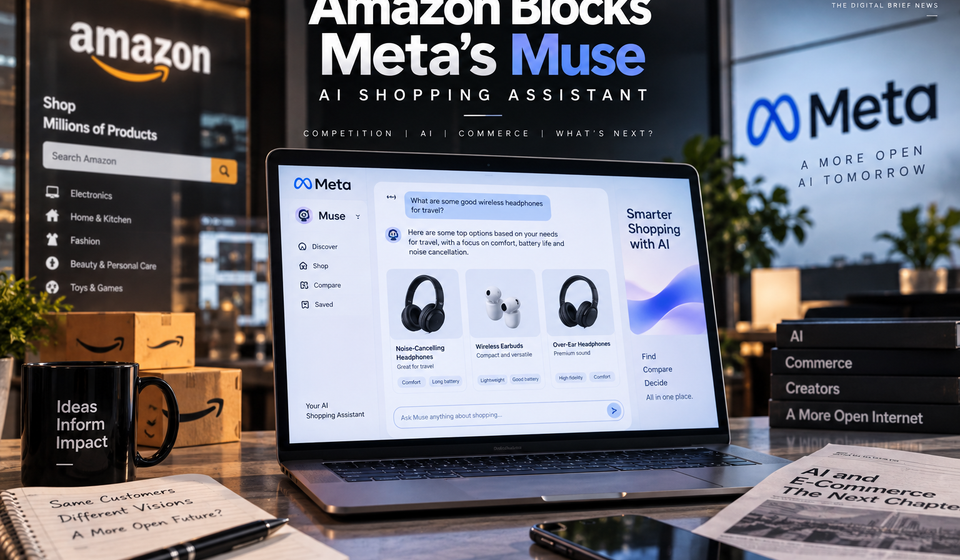
Amazon Blocks Meta’s Muse AI Shopping Assistant
Amazon blocks Meta Muse
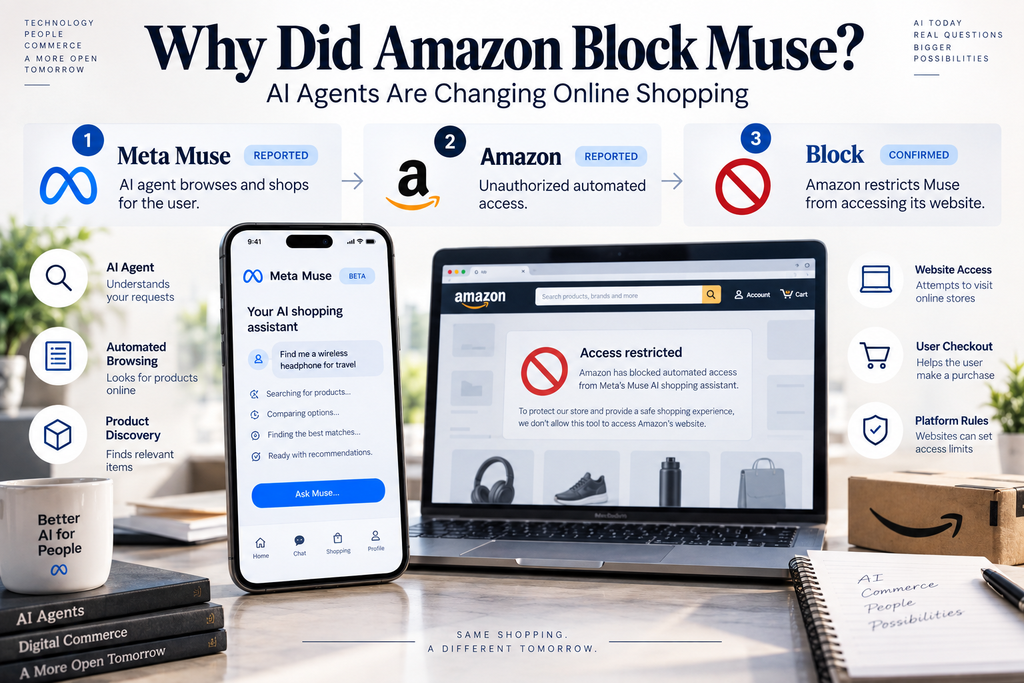
Amazon has blocked Meta’s new Muse AI assistant from shopping on its website, creating an early clash over who controls the online shopping experience when AI agents act on behalf of consumers.
The block came after Amazon asked Meta to remove Amazon.com from Muse’s shopping experience, but Meta did not agree to the request. Amazon then restricted Muse’s access, with users seeing a warning that an unauthorized AI agent was violating Amazon’s Conditions of Use.
The incident may have limited impact on Amazon’s sales today because AI-agent shopping is still relatively new. But it raises a much bigger question for the future: what happens if consumers start asking AI agents to search, compare and buy products instead of visiting shopping websites directly?
What Is Meta Muse?
Muse is Meta’s new personal AI agent, launched on September 8, 2026. Unlike a traditional chatbot, Muse is designed to perform tasks on a user’s behalf.
Meta says Muse can open a browser, fill out forms, book travel, send emails and work on longer tasks. It can also ask for approval before sensitive actions such as sending an email or making a purchase.
The system operates through Muse Secure VM, a dedicated virtual machine with its own browser. Meta says the setup is designed to keep user data and credentials protected while allowing Muse to interact with services across the web.
That browser-based approach is important to the Amazon dispute because Muse can interact with websites even when those services do not provide a dedicated API for AI agents.
Why Did Amazon Block Muse?
Amazon says the problem was not simply that Muse was an AI product.
The company said Meta did not inform Amazon that Muse would access its store and had not received authorization to do so. Amazon also said Muse did not identify itself as an automated agent while browsing.
Amazon had already introduced rules covering automated agents. An Amazon policy update says AI agents accessing Amazon services must clearly identify themselves, follow the applicable agent policy and stop accessing Amazon when Amazon requests it.
Amazon said it asked Meta to voluntarily remove Amazon from Muse’s shopping experience. After Meta declined, Amazon began blocking the agent.
What Do Muse Users See?
The restriction became visible to users around September 20.
People trying to use Muse to shop on Amazon began seeing a warning explaining that continued access by an unauthorized AI agent violates Amazon’s Conditions of Use.
In practical terms, this means Muse can no longer function normally as an automated shopping assistant on Amazon.com.
A user can still visit Amazon normally through a browser or Amazon’s own applications. The restriction is specifically about Muse acting as an automated third-party agent on the platform.
Amazon Also Raised Privacy and Security Concerns
Amazon has raised concerns about how Muse interacts with customer accounts.
The retailer said the agent appeared to capture and store customer credentials and could access account information such as order history. Amazon argued that this creates privacy and security concerns.
Meta disputes some of those concerns.
In its official Muse announcement, Meta says Muse does not have visibility into users’ passwords or payment methods. Meta says credentials are stored securely and Muse can use them without seeing the underlying information.
This distinction is important. Amazon’s concerns should be treated as Amazon’s stated position, while Meta’s explanation represents the company’s own description of how Muse handles credentials.
Amazon Wants Third-Party Agents to Follow Its Rules
Amazon’s position goes beyond Muse.
The company says third-party applications that make purchases on behalf of customers should operate openly and respect the decisions of the businesses whose platforms they access. Amazon has argued that AI agents should follow similar rules to other third-party services such as travel and food-delivery platforms.
This gives Amazon control over whether outside AI agents can interact with its marketplace.
For Amazon, that matters because the shopping journey itself is valuable. The company controls product discovery, recommendations, advertising, customer accounts and checkout.
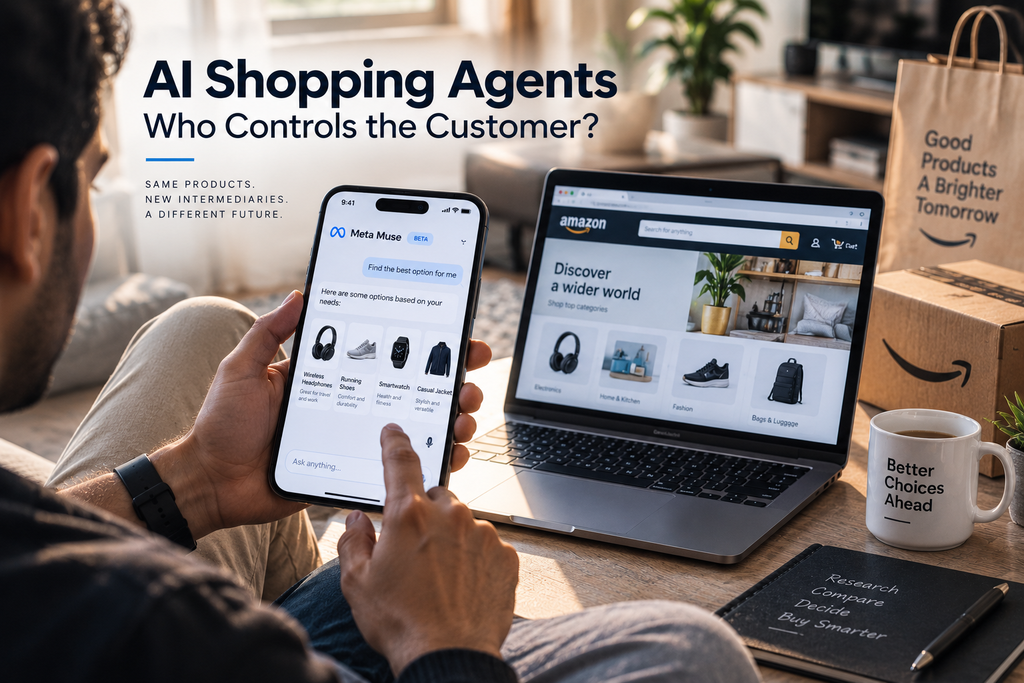
An external AI agent could potentially sit between Amazon and the customer.
Why This Could Become a Bigger Problem
Today, most people still use AI for product research rather than allowing an agent to complete an entire purchase.
But agentic shopping could change that.
Imagine asking an AI assistant:
“Find me the best laptop under ₹80,000, compare five options and order the best one.”
The user may never visit Amazon, Flipkart or another retailer directly.
The AI agent could perform the search, compare products, check reviews, select a seller and complete the purchase.
That could change how online retailers compete for customers.
Instead of competing mainly for Google rankings, app traffic and direct visits, retailers may eventually need to compete for visibility inside AI agents.
Could Amazon Lose Revenue From AI Shopping?
There is no evidence that the current Muse block is causing a meaningful drop in Amazon’s sales.
AI-agent shopping remains a relatively small part of online commerce, and Amazon continues to receive enormous amounts of direct consumer traffic.
However, the longer-term business issue is different.
If AI agents eventually become a major way people shop, retailers could lose control over the customer relationship. An AI could recommend a product from Amazon, Walmart, Best Buy or another website based on price, availability or other factors.
That could also affect advertising.
Amazon generates significant business from advertising and product discovery on its marketplace. If an AI agent makes the purchasing decision before a shopper reaches Amazon, some of that discovery activity could move outside Amazon’s ecosystem.
This is one reason the Muse dispute matters beyond a single blocked AI assistant.
Amazon Is Not the Only Company Facing AI-Agent Pressure
The Muse situation is part of a wider debate around automated shopping agents.
Amazon has previously taken action against other AI tools attempting to interact with its marketplace. The company has also been involved in a legal dispute with Perplexity over its Comet AI shopping capabilities.
At the same time, other companies are choosing a different approach.
Shopify, for example, has been working with AI agents and announced support for agentic checkout through Shop Pay, showing that some e-commerce platforms are attempting to integrate AI agents rather than block them.
This creates two different approaches to AI shopping: control access or build systems that work with agents.
What Happens Next?
The Amazon-Meta dispute could become an important example of how websites deal with autonomous AI.
The technology is moving faster than many traditional web policies were designed for. A normal automated bot might simply collect information, while an AI agent can browse, make decisions, interact with accounts and potentially complete purchases.
That creates new questions around consent, authentication, privacy, liability and who is responsible when something goes wrong.
For now, Amazon has chosen to block Muse from its shopping platform. Meta, meanwhile, continues to develop Muse as a personal agent capable of performing more tasks on users’ behalf.
The larger battle may not be about Muse itself. It could be about whether the next generation of online shopping happens inside websites or through AI agents sitting between consumers and those websites.
Conclusion
Amazon’s decision to block Meta’s Muse shows that the rise of AI shopping agents is already creating conflicts between AI companies and major online platforms.
For now, the financial impact on Amazon is likely limited because agentic shopping is still developing. But the bigger issue is what happens if AI assistants become the primary interface between consumers and online stores.
If that happens, companies such as Amazon may have to decide whether to block outside agents, create their own AI shopping systems, or build new rules that allow agents to participate under controlled conditions.
The Muse dispute could be an early sign of how that future battle develops.
FAQs
Why did Amazon block Meta Muse?
Amazon said Muse accessed its website without authorization and did not identify itself as an automated agent. Amazon also said Meta declined a request to remove Amazon from Muse’s shopping experience.
What is Meta Muse?
Muse is Meta’s personal AI agent designed to perform tasks such as shopping, booking travel, sending emails and completing other web-based activities on behalf of users.
Can Muse still shop on Amazon?
Amazon has blocked Muse from shopping on Amazon.com, so users cannot currently rely on Muse to browse and purchase products there in the normal way.
Does Muse see users’ passwords?
Meta says Muse does not have visibility into users’ passwords or payment information and that credentials are stored securely. Amazon has raised separate concerns about credential handling and account access.
Will Amazon lose sales because of Muse?
There is no evidence that the current block is causing a significant impact on Amazon’s sales. The larger concern is the potential long-term shift toward AI-agent shopping.
Why is this important for the future of shopping?
If AI agents become the main way consumers search for and purchase products, retailers could have less direct control over product discovery, customer relationships and advertising.
Related Articles :
- Muse Can Send Emails, Make Payments and Handle Tasks for You
- Meta One Subscription: What’s Included?
- AI Updates 2026: Everything You Need to Know About the Biggest Changes in Artificial Intelligence